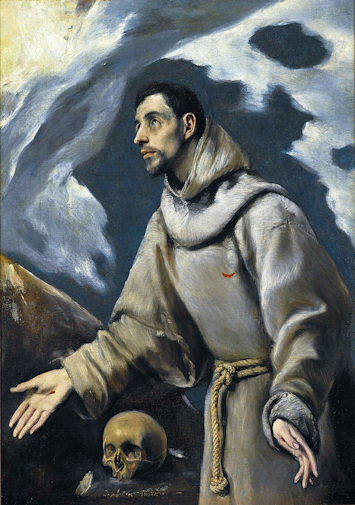
More classic art masterpieces used as illustrations
TL;DR:
Francis of Assisi, a 13th-century lay missionary from central Italy, modeled what it means to live and minister incarnationally—allowing Christ to be seen through his actions and attitudes. Rejecting wealth and privilege, Francis devoted himself to serving others, repairing neglected church buildings, and demonstrating peace and humility, even crossing battle lines during the Crusades to meet peacefully with the sultan of Egypt. His Christlike approach has inspired generations of Christians and has become a model for respectful Christian-Muslim dialogue.
This story of Francis of Assisi is number 3 of a dozen mini-essays published as the “Doing World Missions Well” series in Engage, an online magazine produced by the Church of the Nazarene.
One way of thinking about missionary service is to measure it against the pattern of Christ’s incarnation. That does not mean that missionaries are supposed to become divine, as Jesus is divine. It means that missionaries allow Jesus to be seen in their actions and attitudes, much as the Father was revealed through Jesus’ actions and attitudes. Incarnational living means being able to say with the Apostle Paul: “I no longer live, but Christ lives in me” (Galatians 2:20, 2011 NIV).
Francis, a lay missionary of the 1200s, exemplifies what it means for a missionary to live incarnationally. Francis (whose name in Italian is “Francesco”) came from an Italian city named Assisi. That is why he is called Francis of Assisi (sometimes misspelled by non-Italians as “Assissi”). Many people remember the story of the sermon he supposedly preached to the birds. If we look beyond the many legends surrounding Francis, we can glimpse a missionary through whom Christ shone.
Francis grew up in a wealthy family but walked away from that wealth to become a lay evangelist. He helped repair neglected church buildings in central Italy. Then he realized that his call was more global, so he expanded his vision and founded a religious community. Francis attempted missionary journeys eastward and to Morocco, but storms and illness prevented him from reaching his intended destinations.
One remarkable example of incarnational ministry in Francis’s life occurred during one of the medieval Crusades. While a papal army fought Muslim forces in Egypt, Francis made his way across the battle lines and arranged a meeting with Sultan al-Kamil, the Ayyubid sultan who ruled Egypt.
At the end of their time together, some later accounts attribute to the sultan a response along the lines of, “If I were to meet more Christians like you, I would be tempted to become one.”
Something about Francis communicated the presence of Christ to that Muslim leader far better than the actions of the soldiers in the Crusading army who were laying siege to his city while looting the countryside.
The religious community Francis founded became a prominent missionary order of the Western Church. We know its members today as the Franciscans. As the order grew, Francis’s insistence on poverty and humility presented an ongoing challenge to its members. He abhorred power and prestige and called his group Ordo Fratrum Minorum, a Latin phrase customarily translated as “Order of Friars Minor” or “Order of Lesser Brothers.”
Although the following prayer is widely associated with Francis, it first appeared anonymously in France in 1912 and is not found among his writings. Nevertheless, its themes reflect the spirit of his life and ministry. The prayer has also inspired several musical settings:
Lord, make me an instrument of Your peace;
where there is hatred, let me sow love;
where there is injury, pardon;
where there is doubt, faith;
where there is despair, hope;
where there is darkness, light;
and where there is sadness, joy.
Grant that I may not so much seek
to be consoled as to console;
to be understood, as to understand,
to be loved as to love;
for it is in giving that we receive,
it is in pardoning that we are pardoned,
and it is in dying that we are born to eternal life.
The incarnational life described in the prayer offers a powerful picture of Christ shining through missionaries who allow Him to live in them—people whose lives make the character of Jesus visible to others.
Francis reportedly greeted the sultan in a manner that communicated peace and respect. His courage and gracious manner appear to have made a favorable impression, and their meeting gave them an opportunity to discuss matters of faith. — Paraphrased from Megan Pittman, Northwest Nazarene University graduate student
Cross-cultural missionaries today can learn from the life and teachings of Francis of Assisi, a medieval Italian friar known for his radical commitment to Christ and his notable approach to cross-cultural ministry. Here are seven important lessons from Francis:
Do you enjoy acrostics? Here are more of them.


