More classic art masterpieces used as illustrations on this site
TL;DR:
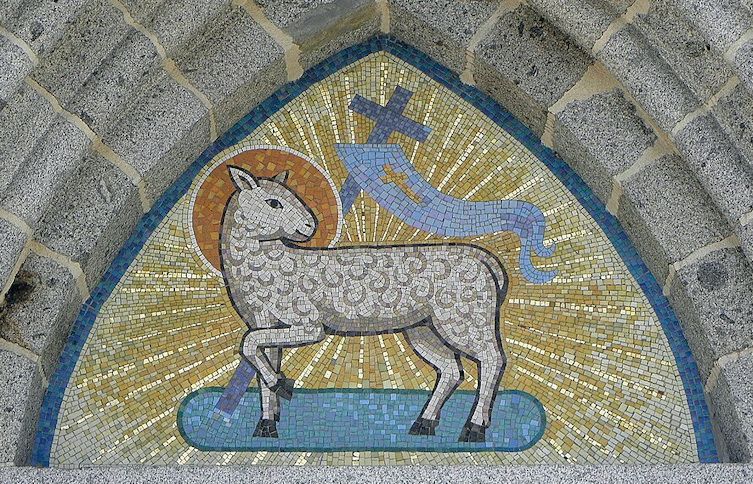
Revelation 21:23–24 offers a powerful image of the fulfillment of world evangelism: “The Lamb is its lamp. The nations will walk by its light.” This vision of people from every ethnic group walking in the light of Jesus, the Lamb, shows the result of God's promise to bless all peoples through Abraham.
Commentary on Revelation 21
Revelation 21, the Bible's penultimate chapter, closes by alluding to world evangelism. The presence of that theme in Scripture's final pages emphasizes the great importance God places on reaching all people with the gospel.
To be sure, Revelation 21:23–24 is not an exhortation to us to finish the job, because it is a vision of the future. Thus, the declaration that “the nations will walk by its light” celebrates the harvest gathered from around the globe.
The Bible frequently uses light and darkness to contrast good with evil. Remember, for example, Jesus' bold proclamation, “I am the light of the world” (John 8:12). That proclamation is echoed in Revelation, where John writes that the Lamb of God will illuminate the New Jerusalem completely.
John also used his statement about the New Jerusalem's illumination to affirm that the gospel is for everyone on earth. The Greek words in Revelation 21 that are rendered “nation” and “nations” are ethnos and ethnē. English words such as “ethnic” and “ethnicity” come from that Greek word. Accordingly, the Easy-to-Read Version renders ethnos in Revelation 21:24 as “the peoples of the world.” That wording has powerful ramifications for world evangelism.
“Nations” in the sense of “ethnic groups” parallels the inclusive language found in Revelation 5:9, 7:9, and 14:6. People from “the nations” walking in the Lamb's light will wonderfully fulfill the promise God made to Abraham, Isaac, and Jacob: “All peoples on earth will be blessed through you and your offspring” (Genesis 28:14; see also 12:3 and 18:18).
World evangelism has long been described as shedding light in dark places. Indeed, when Ada Blenkhorn and E. Meyer collaborated in the early 1900s on a song about Africa's unreached people groups, they gave it the title Dark Africa. Today, that title can seem derogatory or disparaging. The century-old song sought to awaken Christians to the need for spiritual light among “the nations” of Africa.
In addition, we must not ignore the fact that Revelation 21:23–24 announces the fulfillment of Isaiah 60:3: “Nations will come to your light.” These two prophecies—one from the Old Testament and one from the New Testament—point to God's fulfillment of His redemptive plan. Believers participate in that plan by carrying out the Great Commission.
So, even though the prophecy in Revelation 21 appears descriptive, isn't it in some ways prescriptive for us? That is, shouldn't we be doing more than simply rejoicing that people from all over the world will be in the New Jerusalem? Revelation 21:23–24 grows out of every other biblical passage concerning our responsibility to share the gospel with people throughout the world. As we work to carry out the Great Commission, we can rejoice that the vision of Revelation 21:23–24 is headed for fulfillment!
This essay is one of more than three dozen entries in the “Heart of God” series published in Engage, a monthly online magazine. The series examines what the Bible says about world missions.
In John 8:12, Jesus said, “I am the light of the world.” It should therefore be no surprise that Revelation 21 says the peoples of the world will walk by the light of the Lamb. Revelation 21:23–24 may also be considered a fulfillment of Isaiah 60:1, 3: “Arise, shine, for your light has come . . . Nations will come to your light.”
Revelation 21:23–24 declares, “The Lamb is its lamp. The nations will walk by its light.” Those words point to the culmination of God's plan of salvation and redemption. The Lamb is Jesus Christ, whose glory illuminates the New Jerusalem and guides the nations. This vision makes clear the universal significance of Christ's message: He offers salvation, guidance, and hope not merely to a select few but to people of every nation and background. Through faith in Christ, people everywhere can find the way toward righteousness and eternal life.
Historical note: The Xi'an Stele, erected in China in AD 781, refers to Christianity as “the Luminous Religion.”


