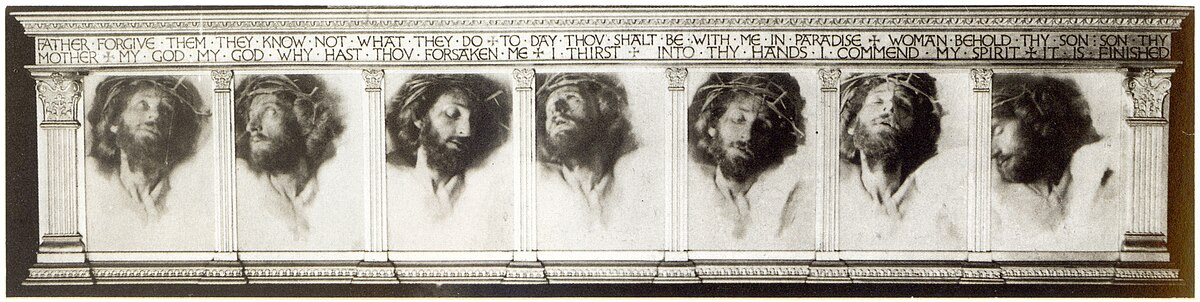
TL;DR:
When Jesus cried out, "My God, my God, why have you forsaken me?" on the cross, He was quoting the opening line of Psalm 22--a passage familiar to Jewish listeners. Alongside His expression of anguish, Jesus may have been pointing listeners to the full psalm, which ends with a triumphant vision of people from all nations turning to the Lord.
What did Jesus mean when he repeated the words of Psalm 22 about God forsaking someone?
A haunting question from the lips of Jesus recorded in Matthew 27:46 and Mark 15:34 is one of the classic "Seven Sayings from the Cross."* Believers have long puzzled over the meaning of this particular saying.
"How could God forsake God?" they ask. A Jehovah's Witness acquaintance of mine even argues that these words prove his group's belief that Jesus could not have been God incarnate.
Three things distinguish this saying from the other six sayings from the cross:
That third distinguishing point may hold the key to understanding why Jesus cried, "My God, my God, why have you forsaken me?" Were these words an agonized cry reflecting intense physical suffering compounded by a sense of abandonment? Or was Jesus trying to communicate something else?
Bible scholars tell us we should read Bible verses in their larger context. Let's do that with this "Saying From the Cross." Those words come from the Hebrew songbook, where they are the opening lines of Psalm 22. Following that opening question, Psalm 22 builds toward a climax which had the Israelites singing:
"All the ends of the earth
will remember and turn to the Lord,
and all the families of the nations
will bow down before Him,
for dominion belongs to the Lord
and he rules over the nations.
. . .
Posterity will serve him;
future generations will be told about the Lord,
They will proclaim his righteousness,
declaring to a people yet unborn:
He has done it!" -- Psalm 22:27-28, 30-31 (2011 NIV; verse 29 omitted)
Do we get too caught up in reconciling this "Saying from the Cross" with our belief in God as Triune? Do God-forsaking-God questions cause us to overlook the reason Jesus quoted Psalm 22?
Consider the wider psalm Jesus quoted. Death was staring Him in the face. Nailing someone to a cross to execute them made it very difficult for that person to breathe. So, when Jesus was hanging on a cross, He may not have been able to recite the entire psalm aloud. Could His quotation of its first line have prompted listeners familiar with the psalm to recall the rest (as, indeed, we often do when we hear a phrase from a well-known song)?
Could Jesus' words in His dying moments on the cross have called attention to Psalm 22's declaration about the ends of the earth remembering and turning to the Lord? Is this "saying from the cross" actually a declaration that God's righteousness would be proclaimed to people yet unborn? If so, the global harvest going on now with things like JESUS Film showings in villages worldwide may be seen as part of that worldwide proclamation.
A good case can be made that in the moments before His death, Jesus may have drawn attention to the closing verses of Psalm 22. For the spectators that day on Calvary, as well as for all those who would read the Gospels in future years, this "Saying From the Cross" could be read as a preview of the Great Commission (Matthew 28:19-20) which Jesus would give to His followers after His resurrection and not long before His ascension to Heaven.
More on this saying from the cross
-- Howard Culbertson, hculbert@snu.edu
This blog on a world missions Bible passage is one of more than three dozen in the "Heart of God" series that was published in Engage, a monthly online magazine. That series looks at what the Bible says about the need for world missions efforts.
Psalm 22 is a Messianic psalm that describes the suffering and anguish of the righteous sufferer. Much of the psalm foreshadows Jesus' crucifixion. Jesus' quotation of the opening line of Psalm 22 affirms His identification with the suffering described in the psalm and may also point to His role as the Messiah.
By quoting the opening of Psalm 22, Jesus may draw attention both to the psalm's closing note of victory and praise and to its description of the eventual worldwide proclamation of the gospel.


