TL;DR:
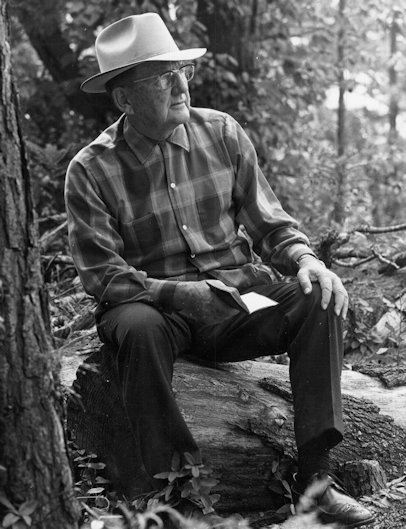
William Cameron Townsend (1896–1982), known as “Uncle Cam,” was a visionary missionary with a passion for Scripture translation. Believing that “the greatest missionary is the Bible in the mother tongue,” he founded Wycliffe Bible Translators and the Summer Institute of Linguistics (now SIL) to pursue that vision. Townsend’s strategic thinking showed that evangelism must respect culture and language to be effective.
What can the birth of a Bible translation agency teach us about world evangelism?
Make disciples of all nations! Doesn't that sound exciting, ambitious, and . . . overwhelming? Indeed, the enormity of what God has called His people to do can either paralyze us into inaction or send us running in all directions.
There is a better response than either of those extremes. The global missionary enterprise needs people who have a strategic plan to carry out Christ's Great Commission. William Cameron Townsend is a good example of a missionary who thought, planned, and worked strategically.
For Townsend, having the Bible available in every language that needed a translation was a strategic necessity for the Church if it was going to be serious about carrying out its God-given global mission. His tight focus helped accelerate a worldwide Bible translation movement. As of August 2025, translation work was in progress in 4,457 languages, while 544 languages still awaited the start of a project considered necessary.
In the early twentieth century, Townsend left college to go to Central America as a short-term volunteer. At that time, selling books, including Bibles, enabled Protestants to carry out evangelistic work in Latin America. To “fly under the radar” and avoid running afoul of the authorities, Townsend became a traveling bookseller, or what was then called a “colporteur.”
After returning to the United States, Townsend felt called to go back to Guatemala as a career missionary. There, he again took up colportage evangelism. One day, in a village market, a man whose mother tongue was Kaqchikel came by Townsend's bookstand. Townsend tried to sell him a Bible in Spanish.
According to a frequently repeated account, the Kaqchikel speaker asked why Townsend’s God could not speak his language.
At that time, Kaqchikel lacked a standardized writing system that was widely used by its speakers. Townsend began learning Kaqchikel and devised an alphabet for writing it. He and Kaqchikel co-translators then devoted more than a decade to translating the New Testament.
Some leaders in the mission organization supporting Townsend questioned the amount of time and energy he was devoting to Bible translation rather than direct evangelism. Townsend’s reply was simple and brief: “The greatest missionary is the Bible in the mother tongue.”
Townsend recognized that world evangelism would be hindered when people could not encounter Scripture in the language they understood best. So, he dedicated the rest of his life to the cause of Bible translation.
He founded Wycliffe Bible Translators, now one of the largest Christian missionary-sending agencies. Through its Vision 2025 initiative, launched in 1999, the Wycliffe movement sought to see a translation project begun for every language community that needed one.
Because the man whom many knew as “Uncle Cam” worked strategically, the Bible is now available in hundreds more languages than it otherwise might have been. Many missionaries have also acquired linguistic skills that have made them more effective communicators of the gospel.
Townsend believed it was important to approach Great Commission work strategically. The enduring influence of his work illustrates the value of that approach. Let’s do the same!
William Cameron Townsend was a visionary missionary who founded the Summer Institute of Linguistics, now SIL, in 1934 and later founded Wycliffe Bible Translators. He dedicated his life to Bible translation, linguistic research, literacy, and Christian mission. His emphasis on cultural sensitivity and local participation made a lasting contribution to Bible translation worldwide. His influence continues in linguistics, missionary work, and the global appreciation of language diversity.
Acting strategically as Townsend did involves being intentional and thoughtful in sharing the gospel in different cultural contexts. Townsend’s example suggests six principles for working strategically:
Let's be clear: Strategic cross-cultural missionary ministry, as exemplified by Cameron Townsend, involves being sensitive, adaptive, relational, and collaborative in sharing the message of Christianity while also addressing the practical needs of the communities being served.
T – Tirelessly devoted to bringing God's Word to the nations.
O – Overcame obstacles with unwavering faith and persistence.
W – Worked among the Kaqchikel people in Guatemala with compassion.
N – Nurtured a vision for Bible translation in every language.
S – Served as a pioneer, founding Wycliffe Bible Translators.
E – Equipped others to continue the mission through training and support.
N – Navigated cultural and linguistic barriers with humility.
D – Dedicated his life to making Scripture accessible to all people.
Like acrostics? Here are more of them.


