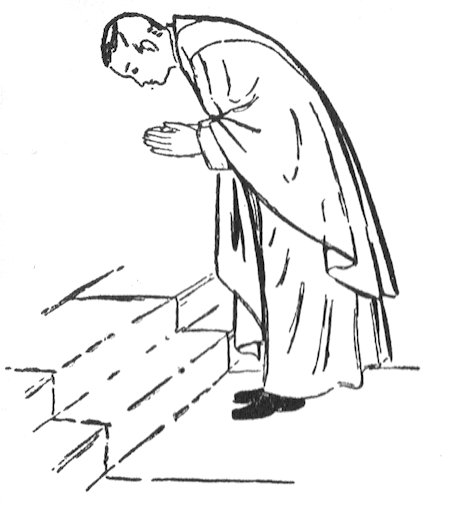
More classic art masterpieces used as illustrations
TL;DR:
This case study explores the cultural and theological dilemma faced by Korean Christians during Chuseok, Korea’s major harvest and family holiday. While the festival shares similarities with Thanksgiving in the United States, some families traditionally bow and present food in honor of deceased ancestors. An accompanying acrostic, “BOWING,” explains meanings associated with ancestral bowing. An afterword outlines eight steps for cross-cultural sensitivity when evaluating such practices.
See these guidelines for reflecting on and discussing case studies.
An American graduate student is teaching English in Korea. He writes to his professor in the United States with a question: Does ceremonial bowing at ancestors’ tombs carry meanings that make the practice unacceptable for Christians?
Here is the student’s letter:
Dear Professor:
In our Cultural Anthropology class, you had us do some case studies involving dilemmas faced by people in other cultures after becoming Christians. I’ve been thinking particularly about those involving new Christians who felt they could no longer participate in some of the traditional practices their families expected of them.
During a recent three-day holiday, Koreans celebrated Chuseok. Some traditions associated with that holiday pose challenges for Korean Christians similar to those in the case studies we examined in class.
The name of this holiday is Chuseok (also spelled Chusok or Ch’usok). Chuseok is comparable in some ways to Thanksgiving celebrations in the United States and Canada because it involves a harvest celebration and is associated with the harvest moon.
The holiday lasts three days. During that time, many people return to their ancestral hometowns or family homes, where extended families gather. Gifts are exchanged, and large meals are shared. The holiday also provides an important opportunity for extended families to gather and discuss family matters. Chuseok is widely regarded as one of Korea’s most important traditional holidays.
What can make the celebration of Chuseok problematic for Christians is that, during the holiday, some families visit the graves of their deceased ancestors. During these gravesite visits, rituals expressing gratitude to the ancestors may be performed. The ancestors may be thanked for the family’s life and material well-being. Prayers may be addressed to the deceased, food may be presented to them, and participants may seek their blessing and bow at the graves.
Today, I had a discussion about this with Dr. Cho, a Korean Bible professor from a nearby university who attends the International English Church. He told me that although he and his family visited the graves of deceased family members during this year’s Chuseok, they did not perform the customary bow.
“Christians do not bow,” he told me.
Our pastor, who was present for part of the discussion, said that Catholics may regard bowing in this setting as permissible. He also noted that some Korean Protestants view such participation as incompatible with the Christian faith.
This issue is a source of tension in families in which some members have become Christians and refuse to bow at their ancestors’ tombs. Other family members may interpret this refusal as a serious rejection of the family.
If I am asked about the dilemma facing Korean Christians, how should I respond? Since bowing as a greeting is such a central feature of Korean culture, could Christians bow at an ancestor’s grave as a way of showing respect without worshiping the deceased? If so, how could they distance themselves from prayers addressed to the deceased and food offered to them?
Sincerely yours,
Depending on the family and the meaning assigned to the ritual, bowing may be associated with the following ideas:
When Christians seek to help believers in another culture decide whether particular practices are appropriate, they should approach the situation with sensitivity and humility. They need a genuine desire to understand both the cultural context and the biblical principles involved. Here are eight action steps:


