Seven steps to good case study use
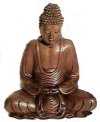
"I don't know what to make of them," Stephen said to himself as he thought about the statues of Buddha he had seen in the homes of church elders.
"Are they idols, or are they simply symbols of national loyalty? In either case, do they not undermine the local Christians' allegiance to Christ? What should I do? Should I raise the issue in the annual meeting of the churches next week, or should I leave it up to the local leaders to decide? Do these relatively new believers fully understand the spiritual implications?"
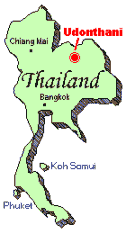
Stephen Ling, an American of Chinese ancestry, had come as a missionary to Nong Pai in northeastern Thailand to minister to the developing Thai Christian community there. With a theological degree and training in evangelism and discipleship, he was excited about his new assignment. He had worked hard on learning the local language and culture and had begun feeling at home in Thailand.
The work had been started years earlier by American missionaries Jerry and Sue Lannin. At the time of the case study, it had grown to 550 believers in 49 congregations meeting in local homes. Each church was composed of two to twelve families and led by an "elder." Staff at an administrative center in the provincial capital of Udon Thani coordinated the work of the churches and evangelistic outreach efforts.
When the Lannins retired, they asked Stephen to take charge of their work. One of his chief tasks was training the "elders," or local church leaders. Each week, he visited several of them in their village homes to help them prepare for the services they conducted in their homes on Sundays.
One of Stephen's first visits was to the home of Seum, the young church leader in Nong Pai. Seum ran a general store and lived in rooms attached to the rear of the store. Worship services were held in his living room.
In the entry were two rows of pictures. The upper row included a photograph of the military graduating class of one of Seum's family members; photographs of Thailand's queen, king, and crown prince; a group photograph of the leading monks of a Thai monastic order; photographs of Thai military officers; and a military recruiting poster. Even more startling to Stephen than the monks' photographs was the second row, which held magazine and calendar pinups of Thai girls in bathing suits. On the far right was a statue of the Buddha.
In visits to other elders' homes, Stephen found that the photo/statue display was typical of village homes, including those of Christians. In the minds of the people in that part of Thailand, there was a close tie between Thai nationalism, the royal family, the military, and Buddhism.
At first, Stephen had hoped that the weekly Bible teaching would lead the Christians to get rid of their Buddha statues. That hadn't happened. To these new Thai believers, displaying a Buddha statue seemed to be an act of patriotism as well as an expression of political loyalty to Thailand's then-reigning king. History also played an important part in the issue. Northeastern Thailand had experienced periods of political and military instability, partly because of conflicts involving neighboring powers. Because of that, people wanted to affirm their allegiance to a government that had brought them peace and a sense of security.
Four months later, Stephen returned to Nong Pai to meet with Seum and several other elders. He decided to ask why they kept their Buddha statues. In response, Seum said that neither he nor his family performed rituals before the Buddha statue in hopes of gaining merit. "But," he said, "I am Thai and loyal to Thailand's monarchy. So, I keep the Buddha statue to show solidarity with my neighbors, my town, and my country."
Wassana, a senior elder, defended Seum's position by appealing to Paul's teaching on Christian liberty in Galatians and to his discussion of eating meat offered to idols in his letter to the Corinthians.
Back home, Stephen questioned the decision of the church leaders. While these leaders usually looked to him for biblical and theological instruction, in this particular matter, they seemed sure of themselves. He wondered whether such an important decision should be left solely in their hands.
Because Stephen's friend Danny knew several Asian Americans, Stephen wrote to him for advice. Danny wrote back:
"I know many Chinese Americans who are Christians and yet still have Buddha statues in their homes. Some even burn incense in front of them. However, they say they do not worship the statue. They contend that what it represents — peace, love, prosperity, and serenity — are all attributes of Christ. But I say only Christ died for our sins. No Buddha did that. So, why don't they have a statue of Christ instead of Buddha?"
With the annual meeting of his churches coming up in a week, Stephen wondered whether the direct approach reflected in Danny's response would be the best course of action. Or should he, as an expatriate missionary, let the matter lie and trust the Holy Spirit to guide the local believers? He did not want the Christians to be accused of disloyalty to their country. At the same time, he suspected that non-Christians might assume that anyone displaying a Buddha statue was Buddhist. In addition, he was concerned that, in the long run, the practice would open the door to syncretism. Finally, after considerable prayer and study of Scripture, Stephen decided to…
This case study is an edited version of one by Lee-Lim Guek Eng that appeared in Case Studies in Missions, edited by Paul and Frances Hiebert, Baker Book House. It may be reproduced only by paying a 35-cent-per-copy royalty to Baker Book House, PO Box 6787, Grand Rapids, MI 49516 USA.
— Howard Culbertson, hculbert@snu.edu
A Buddha statue is a physical representation of the Buddha, Siddhartha Gautama, who lived in ancient India and founded Buddhism. These statues hold deep symbolic significance in Buddhist tradition and practice. They serve at least four purposes:
For many people, a Buddha statue embodies the essence of Buddhist philosophy because it serves as a tangible representation of the ideals of enlightenment, compassion, and spiritual awakening. The statues thus become a focal point for devotion. For some Buddhists, these statues provide both guidance and inspiration.


