TL;DR:
William Carey, often called the father of modern missions, worked in India as a Bible translator, educator, evangelist, and social reformer. Carey’s watchword, “Expect great things from God; attempt great things for God,” influenced Protestant missionary strategy for generations.
This mini-essay is number 4 in a twelve-part “Doing World Missions Well” series published in Engage, an online magazine produced by the Church of the Nazarene.
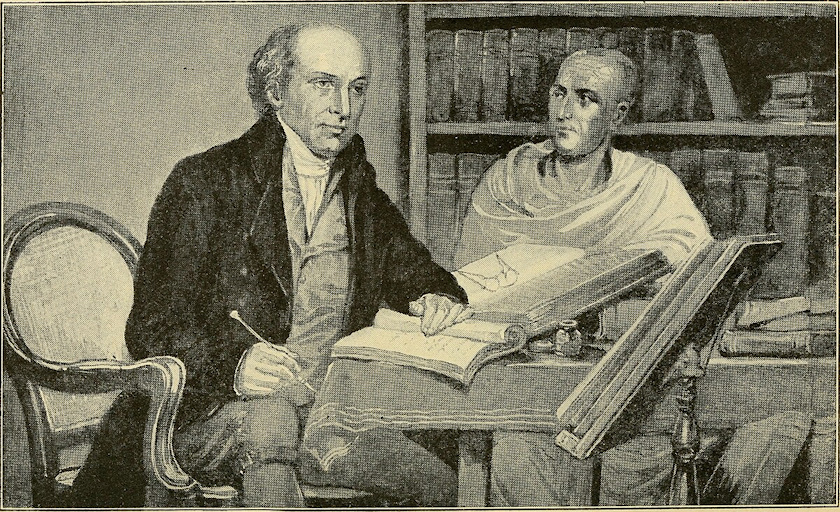
William Carey was a pioneer English missionary who went to India in 1793. He had been a bivocational Particular Baptist pastor who earned part of his living by making and repairing shoes. Carey’s reading of A Voyage Round the World by James Cook helped awaken his missionary vision. In the book, published in 1777, Captain Cook described in detail the diverse cultures he encountered on Pacific islands where Christianity had little or no established presence. The book strengthened Carey’s conviction that Christians had an obligation to take the gospel to those who had never heard it.
When he could not persuade other Baptist ministers to embrace the idea of sending missionaries, Carey helped organize a group of supporters into a missionary-sending organization and became one of its first missionary recruits. Carey spent more than four decades in India as a Christian evangelist, Bible translator, social reformer, anthropologist, and educator.
Some world missions organizations focus tightly on one or two specific areas of ministry. For instance, some focus on relief and development. Others focus solely on Scripture distribution. A few minister exclusively to children. Some concentrate on gospel radio broadcasting.
On the other hand, there are mission boards, including that of the Church of the Nazarene, whose holistic philosophy leads them to undertake a wide spectrum of programs and activities. In missionary strategy, holistic ministry addresses the whole person—spiritually, physically, emotionally, socially, artistically, and intellectually.
Such holistic ministry can be seen in what William Carey did during his more than four decades in India. A pioneer Baptist missionary in the early 1800s, Carey launched a variety of ministries and activities.
Carey left his native England for India in response to Jesus’ Great Commission. He wanted the people of India to have an opportunity to hear and respond to the gospel, so he plunged into open-air evangelism and Bible translation projects involving several Indian languages. Seven years would pass, however, before the mission’s first Indian convert, Krishna Pal, was baptized. When the breakthrough finally came, Carey added discipleship and church planting to his evangelistic efforts.
Carey’s focus was never limited to trying to “save souls.” He wanted the people of India to be all that God had created them to be. So, during his more than four decades in India, Carey spoke and worked against social practices he considered harmful, including the caste system, infanticide, discrimination against women, and the practice of burning widows alive on the funeral pyres of their deceased husbands.
Carey, who was largely self-educated, helped found Serampore College and supported primary and secondary education. His holistic approach also drove him to spend time and energy in fields such as horticulture, agriculture, and economic development.
Carey certainly lived out a watchword he expressed in a sermon before going to India: “Expect great things from God; attempt great things for God.” One might wonder how he found time to learn about and participate in the wide range of holistic ministries he initiated.
For Carey, the gospel was a transformative force for all of life: spiritually, socially, culturally, intellectually, and even economically. This conviction led him to develop a holistic missionary strategy that has caused many people to regard him as a model for cross-cultural missionary activity today. Indeed, for more than 200 years, William Carey’s holistic approach has influenced missionaries and world missions organizations.
People often call William Carey “the father of the modern missionary movement.” They do not give him that title because he was the first Protestant missionary. He was not. Others had been going out from Western Europe for 150 years before Carey set sail for India. That title is ascribed to Carey largely because he helped establish a holistic pattern that has shaped much modern missionary work.
Read about the tragic fire in Carey’s print shop that destroyed countless hours of work.
William Carey’s ministry was innovative in numerous ways. One memorable aspect was his commitment to taking the gospel beyond familiar shores. His global vision challenged a notion prevalent among some Protestants of his day that missionary work should be confined to certain regions. His advocacy for global evangelism helped lay the foundation for modern missions movements and inspired many others to accept God’s call to cross-cultural gospel outreach.
Carey’s linguistic abilities enabled him to lead and participate in teams that translated the Bible or portions of it into numerous South Asian languages. That work opened the door for people to access the Scriptures in their own languages. In addition, his emphasis on education and social reform brought tangible improvements to the communities he served, demonstrating that missionary work involved holistic transformation. Carey’s unwavering dedication, visionary leadership, and innovative methods continue to reverberate through missionary outreach and ministry worldwide, leaving an enduring legacy of faith, compassion, and cross-cultural engagement.
C — Cobbler by trade, yet a scholar at heart.
A — Advocate for taking the gospel afar.
R — Reaching out in India with Bible in hand.
E — Educator, linguist, agronomist, and evangelist, serving through a holistic plan.
Y — Yearning to “expect great things,” he obeyed God’s command.
Like acrostics? Here are more of them.


