 Looking for a
way to raise money for Compassionate Ministries? Try using rice bowls from
RiceBowls.org. Plastic banks in the shape of
bowls full of rice turn loose change and dollar bills into food for the hungry!
Looking for a
way to raise money for Compassionate Ministries? Try using rice bowls from
RiceBowls.org. Plastic banks in the shape of
bowls full of rice turn loose change and dollar bills into food for the hungry!Support disaster relief and response programs as well as long-term development projects.
Christmas is a season of giving, so December is an appropriate time to increase our support for compassionate ministry programs. Here is a meaningful way to give something every day of the month to ministries serving people experiencing poverty or hardship. Each Sunday, remind fellow worshipers to pray for the volunteers and staff of compassionate ministry organizations.
| Amount to give | Reasons to give (Amounts are in U.S. dollars and cents.) |
|---|---|
| _______ 1 | You are blessed if you own a Bible. Many people around the world do not have ready access to one. Give $10 for each Bible in your home. |
| _______ 2 | Many people around the world live on very limited incomes. If you have a stable income, give $2 with a thankful heart. |
| _______ 3 | Did you buy something from a vending machine today? Give a fourth of that amount to Nazarene Compassionate Ministries. |
| _______ 4 | If you have food in the refrigerator, clothes to wear, a roof overhead, and a comfortable place to sleep, you have blessings that many people lack. Give 50¢ for every bed in your home. |
| _______ 5 | Millions of people lack the opportunity to learn to read. Give $10 in gratitude for the blessing of literacy. |
| _______ 6 | Many children have lost parents to AIDS and other diseases. Give $5 for each of your parents who is still alive. |
| _______ 7 | If you have money in the bank and cash or a credit card in your wallet, you enjoy financial resources that many people lack. Give a dollar from your wallet or all your spare change to help others. |
| _______ 8 | Jesus said, "I am the light." Give 10¢ for every lightbulb in your home. |
| _______ 9 | Hunger and malnutrition threaten lives every day. Give $2.50 if you ate today. |
| _______ 10 | Floods and other disasters have displaced many people in Mozambique and elsewhere. Give 25¢ for every year you have safely lived in your home. |
| _______ 11 | Haiti is the poorest country in the Western Hemisphere. Many people in Haiti lack reliable access to safe water. Give 50¢ for each water faucet in your home. [ e-book on Haiti ] |
| _______ 12 | Hunger and poor sanitation have caused immense suffering and countless preventable deaths. Give $10 in gratitude for the gift of life. |
| _______ 13 | Nazarene Compassionate Ministry regional and field personnel are at work around the world. Give $10 if it's been more than a month since you prayed for them. |
| _______ 14 | Imagine what it would be like if there was no bathroom in your home. Give 50¢ for every bathroom in your home. |
| _______ 15 | Many people in developing countries live on extremely limited incomes. Give $10 if you have a job. |
| _______ 16 | Millions of children do not have access to a complete elementary education. Give $1 for each high school graduate and $2 for each college graduate in your family. |
| _______ 17 | Did you attend church this week without the threat of persecution, torture, or death? Thank God, and give $10 so that others might have the same privilege. |
| _______ 18 | Have you ever made a New Year's resolution to live more simply so you could give more to Kingdom causes? Give $10 if you made but failed to keep such a resolution. |
| _______ 19 | Mudslides and other disasters have caused people in Venezuela and elsewhere to lose their homes and possessions. Give $10 if you have never experienced losing everything you own. |
| _______ 20 | For many in the developing world, walking is their only form of transportation. Give 25¢ for each person coming to visit you this Christmas season. |
| _______ 21 | Throughout Asia, many undernourished people struggle to meet their daily nutritional needs. Give 50¢ for every trip you made to the grocery store this past week. |
| _______ 22 | For people in some countries with cold winters, it can take six months to save enough money to buy a coat. Give 50¢ for every coat in your house. |
| _______ 23 | Most people in the developing world have to work every day just to survive. Give 50¢ for every day you have off from work for this holiday season. |
| _______ 24 | Christmas is often a time of celebratory parties. Give 50¢ for each Christmas party to which you were invited this year (even if you did not attend them all). |
| _______ 25 | The poor find it difficult to give gifts to family and friends. Give 50¢ for each gift you have received this Christmas season. |
| _______ 26 | Many people lack access to adequate health care. Give 50¢ for each container of medicine in your medicine cabinet. |
| _______ 27 | Every day, children die from preventable diseases. Give 50¢ for every healthy child in your family. |
| _______ 28 | Warm carpets or area rugs are nice on cold winter days! Many people have only dirt floors in their homes. Give 25¢ for each carpeted room or large area rug in your home. |
| _______ 29 | Many people lack reliable access to communication technology. Give 50¢ for each phone owned by your family. |
| _______ 30 | Many people must go barefoot. Give 25¢ for every pair of shoes you own. |
| _______ 31 | Few people living in poverty have money set aside in an emergency fund. If you have one, give $5. If you do not have one, give $10. |
___________ Total to give this month to Compassionate Ministries
Looking for a
way to raise money for Compassionate Ministries? Try using rice bowls from
RiceBowls.org. Plastic banks in the shape of
bowls full of rice turn loose change and dollar bills into food for the hungry!
In Matthew 26, Jesus said, "The poor you will always have with you." Should that be taken to mean that poverty should not concern us? What does God's Word say about ministry to people in need?
Caring for the poor verses in the Bible Wesleyan heritage of serving the poor and marginalized
What does Jesus' "rich fool" parable and His follow-up teaching mean for us today?
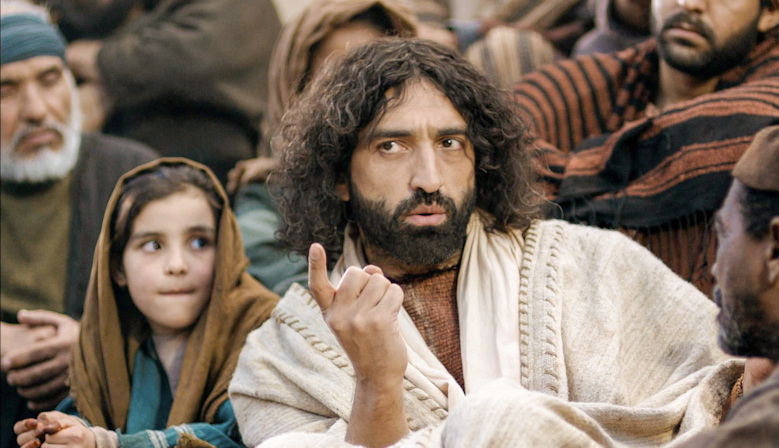
"You fool ... " Frank words about amassing riches || Image source
Commentary on Luke 12
13 Someone in the crowd said to him, "Teacher, tell my brother to divide the inheritance with me."
14 Jesus replied, "Man, who appointed me a judge or an arbiter between you?" 15 Then he said to them, "Watch out! Be on your guard against all kinds of greed; life does not consist in an abundance of possessions."
16 And he told them this parable: "The ground of a certain rich man yielded an abundant harvest. 17 He thought to himself, 'What shall I do? I have no place to store my crops.'
18 "Then he said, 'This is what I'll do. I will tear down my barns and build bigger ones, and there I will store my surplus grain. 19 And I'll say to myself, 'You have plenty of grain laid up for many years. Take life easy; eat, drink and be merry.'"
20 "But God said to him, 'You fool! This very night your life will be demanded from you. Then who will get what you have prepared for yourself?'
21 "This is how it will be with whoever stores up things for themselves but is not rich toward God."
22 Then Jesus said to his disciples: "Therefore I tell you, do not worry about your life, what you will eat; or about your body, what you will wear. 23 For life is more than food, and the body more than clothes. 24 Consider the ravens: They do not sow or reap, they have no storeroom or barn; yet God feeds them. And how much more valuable you are than birds! 25 Who of you, by worrying, can add a single hour to your life? 26 Since you cannot do this very little thing, why do you worry about the rest?
27 "Consider how the wild flowers grow. They do not labor or spin. Yet I tell you, not even Solomon in all his splendor was dressed like one of these. 28 If that is how God clothes the grass of the field, which is here today, and tomorrow is thrown into the fire, how much more will he clothe you of little faith! 29 And do not set your heart on what you will eat or drink; do not worry about it. 30 For the pagan world runs after all such things, and your Father knows that you need them. 31 But seek his kingdom, and these things will be given to you as well.
32 "Do not be afraid, little flock, for your Father has been pleased to give you the kingdom. 33 Sell your possessions and give to the poor. Provide purses for yourselves that will not wear out, a treasure in heaven that will never fail, where no thief comes near and no moth destroys. 34 For where your treasure is, there your heart will be also."
"Is there anything wrong with Christians enjoying the same standard of living as non-Christians?" The woman's question was sincere.
Both she and her husband came from a relatively low economic stratum, but they had worked hard and intelligently. Now they drove an expensive car and had a three-bedroom brick house in the country. As we talked, their children and ours were splashing happily in their backyard swimming pool.
However, a passing remark by a Christian friend had recently begun to trouble her. Was it wrong for Christians to have what they now possessed?
When Jesus said, as Luke records in chapter 12, "Sell your possessions and give to the poor," was He talking only to His disciples at that point in their lives? Or did He mean for those words to reach across the centuries and become a no-questions-asked command to all affluent American Christians?
My friend and I talked for a long time about her questions. We talked about what Jesus had to say in Luke 12, where He deals with materialism. We reminded ourselves that Jesus always went to the heart of an issue and was more concerned about one's attitude toward possessions than about possessing them.
The devil tries to push us into making our daily pursuits for a living our primary goal while we shift Kingdom of God issues to secondary status. Jesus knew that when He said, "Do not worry about tomorrow."
Later that day, the lady's husband picked up the subject of their fairly recent affluence, so we talked some about priorities and primary goals in life. Then, he said, "Until we started tithing, nothing was going right financially with us. This has all come to us since we started putting the Lord first."
There was at least part of their answer. Jesus said, "Seek first his kingdom" (Matthew 6:33). He also said, "Your Father knows what you need" (Matthew 6:8) and "These things will be given to you as well" (Matthew 6:33).
This Texas family had been attempting to follow this command of Jesus. In straightening up their lives spiritually, they had also rearranged their priorities so that their lives now gave evidence of trust in God.
I couldn't tell this family the exact standard of living at which they should live as Christians. I could tell them that the Lord doesn't want to send us on a guilt trip if our priorities are right. What He does call us to do is to put first things first.
I have known believers who complained so much about money that they seemed to be in this "anxious" condition Jesus warned against. It didn't seem to have penetrated their minds that God, who has given us the greater things (forgiveness of sins, eternal life, and sonship), may be expected to give us the smaller ones.
One of the enjoyable parts of a missionary's deputation or home assignment is meeting American Christians who've discovered the joy of putting the Kingdom of God first in their lives, really first.
Many whom I've met have purposely chosen to spend less on themselves to give priority to building the Kingdom. They give a large enough percentage of their income to the church that it affects their standard of living.
What a blessing it is to be with people like the Don Messers, the Carl Dueys, the Lloyd Silers or the Gene Phillips. They've all discovered a real sense of joy in trusting God with their future.
Anxious about tomorrow? Not them! They're seeking first the Kingdom of God, and He is providing for their other needs.
I wrote this devotional blog post while Barbara and I were missionaries in Italy. It is one of a series of 52 brief devotionals written for The Standard, a Faith Connections take-home curriculum piece for adult Sunday school classes produced by the Church of the Nazarene.
-- Howard Culbertson, hculbert@snu.edu


