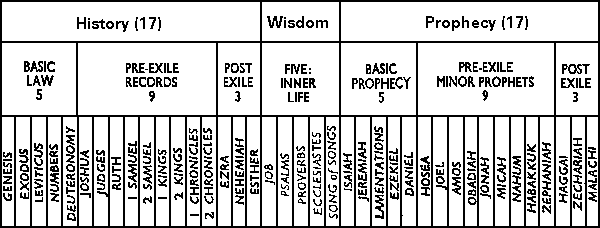
Although we speak of the Bible as one book—and it can rightly be considered one—it is also a collection of documents written by about 40 divinely inspired authors over a period of at least 1,500 years. Those documents include historical narratives, letters, prophetic messages, worship songs, and collections of wise sayings.
Animated version of this graphic
Note: The writings of the Old Testament are arranged primarily by type rather than in strict chronological order. However, there is some chronological order within each grouping. (See another way of understanding how the biblical writings are organized.)
—Howard Culbertson, hculbert@snu.edu
The Old Testament is divided into several distinct groups of books. Books in each group or genre serve a specific purpose within the Hebrew Bible, or Old Testament. One traditional system of organization uses four groupings: the Torah, the historical books, the books of poetry and wisdom, and the prophetic books. The first grouping contains the books of the Torah, also known as the Pentateuch. These five foundational texts of Judaism are Genesis, Exodus, Leviticus, Numbers, and Deuteronomy. These books describe the creation of the world, the covenant between God and the Israelites, and the laws and rituals governing their lives.
Following the Torah are the historical books. These documents narrate the history of the Israelites from their conquest of Canaan to the Babylonian exile, including stories of figures such as Joshua, Samuel, and various kings. The next grouping contains the books of poetry and wisdom, including Psalms, Proverbs, and Ecclesiastes. These writings offer philosophical reflections, prayers, and practical guidance.
Finally, there are the prophetic books, which are divided into the Major Prophets, such as Isaiah and Jeremiah, and the Minor Prophets, such as Amos and Hosea. These writings contain messages of warning, judgment, and hope for God's people. Note: The words "major" and "minor" do not refer to importance. Instead, the terms generally refer to the length of the books. For example, Isaiah, a Major Prophet, has 66 chapters. Jonah, a Minor Prophet, has four chapters. However, the messages God communicates through both groups are equally important.