More classic art masterpieces used as illustrations
TL;DR:
When a family of recent converts in India misses the lamps and festivities of Diwali, a missionary must consider how to respond. Could they enjoy familiar customs while expressing their faith in Jesus as the Light of the World? This case study explores cultural belonging, Christian witness, and the risk of syncretism. A background section describes common observances across the five days of Diwali.

It was Diwali time in India, and dusk was settling over the village of Dipri in Uttar Pradesh. Victor
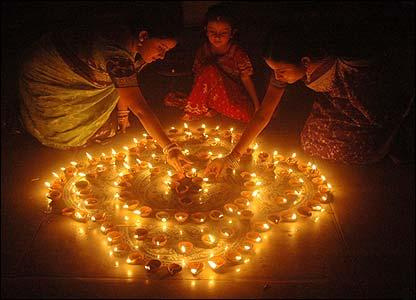
Pakraj, a Christian missionary from Madras, walked along the street to his home. Although lights twinkled merrily from the little clay-pot lamps decorating most of the homes, they did nothing to lighten his mood. Those lamps symbolized what was vexing him!
Victor was trying to come up with an answer to a question that 14-year-old Dhuwarak Prasad had
asked him the night before. As always, Dhuwarak's voice was respectful when he spoke. His
eyes, however, had a pleading look as he asked, "Why can't we light our house with beautiful
little lamps and decorate our rooms at Diwali? Or, if we can't do it at our Hindu festival, could
we do it at Christmas time?"
Mr. and Mrs. Pakraj had moved to Dipri two years ago. They began their ministry by holding a Vacation Bible School. A handful of boys and girls had shown up, all from a community described in the original account as "Harijan" (a dated label for people treated as "untouchable" under the caste system). During that summer, a number of those boys and girls had accepted Christ as Savior and Lord. Among them was Dhuwarak Prasad, then twelve years old. Because Dhuwarak's parents had seen positive changes in their son's life after his conversion, they were happy with his decision to follow Christ. Mr. and Mrs. Prasad eventually decided that they, too, would become Christians.
Their decision came a few months before Diwali, also called Deepavali. Among its varied traditions are the story of Krishna defeating Narakasura and prayers to Lakshmi, the goddess of wealth. [ visual representation of Lord Krishna ]
The Pakrajs visited the Prasads often and had them over to their own home as well. When the Prasads became Christians, they were socially ostracized by others in their community. So, the fellowship of other believers filled a void.
As Diwali approached, the villagers began decorating their homes, preparing little clay lamps they would place around them. To celebrate the festival, many people thatched their houses with new grass and bought new clothing. The Prasads, however, began feeling depressed. For the first time the Prasads could remember, their home would be dark and undecorated at Diwali. It didn't help their mood that Mr. and Mrs. Pakraj were away visiting a neighboring village.
When the Pakrajs returned, the Prasad family immediately went over to welcome them back. While they sat together and Mrs. Pakraj prepared the evening meal, Dhuwarak asked his disturbing question. Mr. Pakraj had said he needed a little time to think and pray about his response. So, he invited the Prasad family to return the following evening to discuss the issue further.
As Victor neared his own home the next evening, he was still unsure exactly what he would say to the Prasads. He thought about the ways Christians had given familiar customs new meanings over the centuries. Could the Diwali lamps likewise point to Jesus, whom John 8:12 calls the light of the world?
Could a similar reinterpretation be made of the Hindu festival of Diwali, whose traditions include stories of good triumphing over evil? Victor wondered if there was a way that something in the Diwali festival could become one of those "redemptive analogies" that Don Richardson had written about. Perhaps.
Victor Pakraj felt it was important for new converts to make a clear break from Hinduism. If they did not draw clear distinctions between Hinduism and Christianity, the Christian community risked being absorbed under Hinduism's inclusive umbrella. If that happened, the distinctiveness of Jesus Christ and the witness to His saving power would be blurred and perhaps completely lost.
On the other hand, Victor also knew that he must help the Prasad family find a way to restore the joy of their salvation. He wondered how to do that. What relevance, if any, did Diwali have for Christian believers? Finally, Victor decided . . .
This case study is an edited version of one by Simon P. David in Case Studies in Missions, edited by Paul and Frances Hiebert, Baker Book House. It may be reproduced only by paying a 35-cent per copy royalty to Baker Book House, PO Box 6787, Grand Rapids, MI 49516 USA
Seven steps to good case study use
 The Holiday
Spot: Diwali
The Holiday
Spot: Diwali
-- Howard Culbertson, hculbert@snu.edu
Diwali, also known as Deepavali, is one of the most widely celebrated festivals in India and by Indians worldwide. It typically falls between mid-October and mid-November, depending on the lunar calendar.
The festival spans over five days and is marked by various traditions and rituals. Each day is meaningful in its own right:
D - Divine light symbolizes the victory of good over evil, with lamps (diyas) lit to celebrate.
I - Illumination is everywhere during Diwali, as homes, Hindu temples, and streets are brightly decorated with lights.
W - Wealth is honored with prayers for prosperity and happiness in the coming year.
A - Auspicious beginnings are celebrated, as many start new ventures or buy new items during Diwali.
L - Laughter and joy fill the air, with family gatherings, delicious sweets, and festive activities.
I - India is the birthplace of Diwali, but it is celebrated by millions worldwide, transcending borders and cultures.
Like acrostics? Here are more of them


