Share this page:


TL;DR:
Jesus modeled incarnational ministry by living among the people He served, speaking their language, and sharing their daily lives. Cross-cultural missionaries today are called to do likewise—learning local languages and customs, empathizing with those they serve, and becoming bicultural without abandoning their own identity. This process of identification builds trust and makes the gospel credible.
This page brings together two related mini-essays: "He lived among us," from the "Missionary ministry that reflects Christ" series, and Mary Slessor's story, the first of 12 articles in the "Doing World Missions Well" series published in Engage, an online magazine produced by the Church of the Nazarene.
"The Word became flesh and made his dwelling among us."
— John 1:14 (NIV 2011)
What is one of the greatest challenges of cross-cultural missionary service? It may be becoming genuinely bicultural—feeling so at home in another culture that one is no longer regarded simply as an outsider.
In the opening words of his Gospel, the apostle John declared that God Himself had lived "among us." The Message paraphrase of the Bible colorfully renders John 1:14 as "The Word became flesh and blood and moved into the neighborhood," while the Common English Bible says, "He made his home among us." The classic Amplified Bible says that Christ "tabernacled (fixed His tent) among us."
These various expressions all point to the fact that Jesus lived as a first-century Jew. He spoke the language of the people around Him. He ate at their tables and celebrated holidays with them. He traveled around with them. He interacted with their children. Jesus was truly at home in first-century Jewish culture.
In this day of instant communication, airplane travel, and Google Translate, rookie missionaries can be tempted to try shortcuts or even opt to bypass the hard work of language learning and cultural adaptation. That might seem like a strategic move that will allow them to begin ministry immediately. However, neglecting language learning and cultural adaptation would be a shortsighted decision for new missionaries. Missionaries who follow Jesus' example recognize that time spent "moving into the neighborhood" is an essential part of ministry. Like Jesus, perceptive missionaries spend time acquiring fluency in the language of a people group. They adapt to unfamiliar customs. They embrace a culture not their own and come to feel at home in it. Language learning and cultural adaptation require sustained effort.
Remember what Jesus said in Matthew 18:2-4 about becoming "like little children"? To be sure, Jesus used those words in a context different from cross-cultural missionary service. Nonetheless, the idea of becoming like a little child also speaks to learning the language and culture of the people we want to serve. We do need to become like little children as we enter an unfamiliar culture. We must go in with our eyes wide open, trying to learn everything we can. It will take time, and we will make mistakes along the way, but the process will increase our long-term effectiveness as Christ's ambassadors.
If we're going to minister in the way Jesus did, we must "pitch our tent among them" (as some scholars say the Greek verb in John 1:14 could be rendered). Will "living among them" be hard and sometimes seem sacrificial? Yes, but we must do it if we are going to follow the example of our Lord.
This mini-essay on Christlike attitudes and actions that need to be present in cross-cultural missionary service is one of a dozen articles in the "Missionary ministry that reflects Christ" series published in Engage magazine.
What can we learn from the woman whose story Carol Christian and Gladys Plummer told in God and One Redhead?
Mary Mitchell Slessor (1848–1915) was a Scottish Presbyterian missionary who served in Africa. In 1876, she went to what is now Nigeria and died there after nearly 40 years of Christian missionary work. In addition to preaching the gospel, she was a school supervisor, dispenser of medical aid, mediator of village disputes, promoter of women's rights, and a rescuer of children from infanticide. She adopted a standard of living similar to that of the people she served.
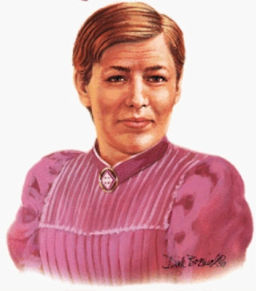
Historically described as "more African than the Africans"
Missionary work that follows first-century patterns involves settling in with a people group for a considerable period. It means living with them and connecting with them on a variety of levels. It involves eating their food, learning their language, and enjoying their humor. It includes developing genuine empathy for them.
Such purposeful participation by missionaries in another culture is called "identification." It does not necessitate "going native" and totally forsaking one's own culture. It means becoming bicultural in addition to becoming bilingual.
Over the centuries, many Christian missionaries have modeled close identification with the people they served. One example is Mary Slessor, who served for nearly 40 years in Africa.
Born into a poor Scottish family in the mid-1800s, redheaded Mary felt a call to ministry at age 11. That same year, she also went to work in a textile factory. Her alcoholic father could not provide for his family, so young Mary worked ten-hour days, six days a week, to help support her family.
Missionary David Livingstone, who was then in Africa, became Slessor's hero. After Livingstone's death, she determined to follow in his footsteps. In 1876, at age 28, Mary Slessor arrived in Calabar, a region of what is now Nigeria.
Mary was initially assigned to work in a city school with other European missionaries. Her heart, however, was in doing pioneer work among unreached people. Other missionaries spoke of the "savagery" and "heathenness" of such people, but that was exactly where Mary felt the gospel needed to be lived and proclaimed.
Four years later, she was able to move into a rural area beyond the mission station. Deciding to live with the local people as they lived, she moved into a traditional African house. As she settled in, identifying with the people she had come to serve became a core value. Among other things, she discarded the multi-layered petticoats worn by many European women missionaries, choosing instead simple cotton dresses more in line with what African women were wearing.
Other missionaries sometimes found Mary's strong personality difficult to work with. Yet she developed close relationships with the local people. Her identification with them was so authentic that an African church leader once said she was "more African than the Africans."
Indeed, because of her close identification with the people, Mary Slessor was able to live out the gospel among them and play an important role in resolving conflicts among local communities. She challenged practices she believed were harmful and worked to end the killing of twins. She was so respected and influential that she became known as "the white queen of Calabar."
In authentic identification, missionaries can say (either out loud or at least to themselves), "When I am among you, I feel at home." Mary Slessor's life appears to have embodied that sense of belonging.
— Howard Culbertson, hculbert@snu.edu
"Mary Slessor's desire to make a difference was not deterred by her gender or the status of women in those days but was fueled by a sincere determination to be a blessing for the people of Africa." — Aneel Mall, Northwest Nazarene University graduate student
Like acrostics? Here are more of them.
In the context of cross-cultural Christian missionary work, "identification" typically refers to the process by which missionaries immerse themselves in the culture, language, and customs of the people they serve. This involves not only learning about cultural patterns and values but also adopting certain aspects of the local way of life. The objective is to relate to and connect with the ethnolinguistic community they serve.
Identification is a key to fruitful cross-cultural missionary ministry because it builds trust, understanding, and acceptance within the local community. By demonstrating respect and love for the culture and customs of the people we are trying to reach and serve, we can build meaningful relationships. This can open the door to communicating the gospel message more effectively.
This identification approach contrasts with a more top-down missionary model, where missionaries may seek to impose their own cultural norms and practices on the people they are trying to reach. Identification in global missionary ministry requires humility, empathy, and cultural sensitivity.
The ways Bible translators have rendered John 1:14 include:
John 1:14 describes the unique incarnation of the Son of God. His dwelling among us also provides a pattern of presence, humility, and love for Christian ministry.
Even in the age of digital media, would-be missionaries should see two important lessons in the wording of John 1:14.
"Picking up your whole life, moving to another country, entering and immersing yourself in another culture, and working day in and day out to bring the gospel to the people is a pure reflection of God's heart and character." — Madi Haskell, Nazarene Bible College student