TL;DR:
Missionary work that reflects Christ must move beyond control and paternalism to genuine empowerment. Jesus modeled this approach by sending His disciples out, trusting them with responsibility, and assuring them of His continued presence. Paul continued this pattern by appointing local leaders and maintaining supportive relationships with them. Empowerment in world missions means developing confidence and capacity in local believers rather than creating dependency on foreign leaders and funding.
Are we tempted to stay in charge and call the shots?
“For the kingdom of God is not a matter of talk but of power.” — 1 Corinthians 4:20, 2011 NIV
When Jesus gave His Great Commission, He wasn't simply assigning a task to people. He was empowering them. Indeed, "to commission" carries a bit of the same meaning as the verb "to empower."
We must work to create a culture of empowerment. Empowerment means giving people authority and power. Jesus did not hesitate to do that. He did not try to keep followers on a "short leash." Though His earthly ministry lasted only three years, the Gospels mention instances of Jesus sending followers out on short-term missions involving preaching, healing, and deliverance. More importantly, Jesus empowered others for the future, when He would no longer be physically present with them. For example, the night before His crucifixion, Jesus said to His closest disciples: “Whoever believes in me will do the works I have been doing, and they will do even greater things than these” (John 14:12, 2011 NIV). Because those words expressed trust and gave people permission to dream, the message was empowering.
Jesus certainly knew how fallible human beings could be. Even so, He expressed confidence in His followers. Why? Was it because empowerment tends to result in growth and maturation? Perhaps. Empowerment does open up new vistas for people. It turns people into decision-makers. It spurs the development of previously dormant leadership gifts. Empowered people gain confidence because someone believes in them.
Empowerment does not mean shoving people out the door and leaving them to flounder with no mentoring or accountability structures. Jesus received reports from those He had sent out two by two. His Great Commission includes the assurance, “And surely I am with you always, to the very end of the age” (Matthew 28:20, 2011 NIV).
The apostle Paul followed Jesus' example of empowering leadership. As Paul made his missionary travels, he appointed "elders" or leaders for the churches he planted. Then, he kept in touch with these churches, writing letters to them and visiting them. When Apollos needed fuller instruction, Paul's ministry associates Aquila and Priscilla explained the way of God to him more adequately. Paul also entrusted Titus and Timothy with significant leadership responsibilities among developing churches.
Global missionaries dream about reaching people who have not heard or embraced the gospel. One potent way of turning such dreams into reality is to empower developing churches and their leaders. Among other things, empowering others multiplies the reach and fruitfulness of evangelistic and discipleship ministries.
Once in a while, missionaries fall into the trap of staying in charge as they wait and wait for the perfect successor to emerge. Others think they have empowered people when all they have done is give out a checklist of tasks to complete. Jesus did not approach His earthly ministry in either of these ways. Missionaries who follow Christ's model of leadership will empower people as Jesus did.
This page brings together two related reflections: one from the “Mission Ministry that Reflects Christ” series and the following example from the “Doing World Missions Well” series. The Christlike-missionary reflection is one of a dozen articles originally published in Engage, an online magazine produced by the Church of the Nazarene.
We often focus on what missionaries "give" people: the gospel, Bible teaching, clean water, health care, disaster relief, and many other things. In reality, effective missionary work should move beyond giving things to empowering people, strengthening them, and giving them confidence to exercise their rights and determine the direction of their lives.
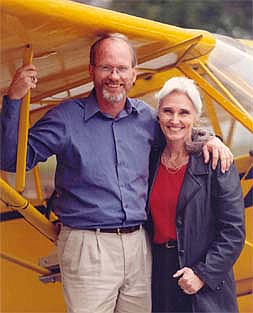
Steve Saint illustrates how missionaries can empower believers from other cultures. Steve was five years old when Waodani warriors killed his father, a missionary pilot, and four other missionaries on a sandbar along a river in an Ecuadorian jungle.
When Steve's aunt Rachel Saint and fellow missionary Elisabeth Elliot moved into a Waodani village to evangelize, Steve began spending his summers with them, living among the very people who had killed his father.
Steve fell in love with the Waodani. When he was 14, Steve was baptized by Waodani church leaders not far from where his father had been killed by them nine years earlier. Steve came to use the endearing term "grandfather" for Mincaye, the man whose spear took his father's life.
After Steve's aunt Rachel died, the Waodani asked Steve to come back to Ecuador to live among them. He agreed, and in his book The Great Omission: Fulfilling Christ's Commission Completely, Steve says that what he saw on his return to the Amazon rainforest disappointed him.
Steve said he was "dismayed" to find the Waodani church "less functional than it had been when I lived with them during school vacations." What caused the dysfunction? Besides non-Christian outsiders encroaching on their lives, the Waodani's self-reliance had been eroded by "all of the benevolence they received from Christian missions and relief organizations."
Well-meaning but sadly misguided American believers had reduced the Waodani to waiting for handouts from outsiders. When the Waodani churches began, they were almost completely self-sustaining. On Steve's return, he found them waiting around for "stuff" from the foreigners: material goods, church building repair, construction projects, health care, and training conferences.
Determined to move relationships between outsiders and the Waodani from paternalism toward empowerment, Steve helped the Waodani regain control over their lives, make their own decisions, and see themselves as equals in their relationships with outsiders.
The journey was not always easy. Habits and mindsets can be hard to change. Steve also had to deal with well-intentioned Americans eager to do things for the Waodani, whom they saw as backward, deprived, and needing to move into the "modern world."
Steve encouraged the Waodani to decide for themselves whether to remain in the rainforest and how much they wished to adopt from other cultures. He suggested they consider the use of appropriate technology, and he even helped invent a dental office that would fit in a backpack for jungle use.
Steve Saint worked alongside Waodani leaders as they sought greater self-reliance and control over decisions affecting their communities. One encouraging result is that Waodani believers now evangelize other Indigenous communities in the Amazon basin.
Like Steve Saint, good missionaries empower people.
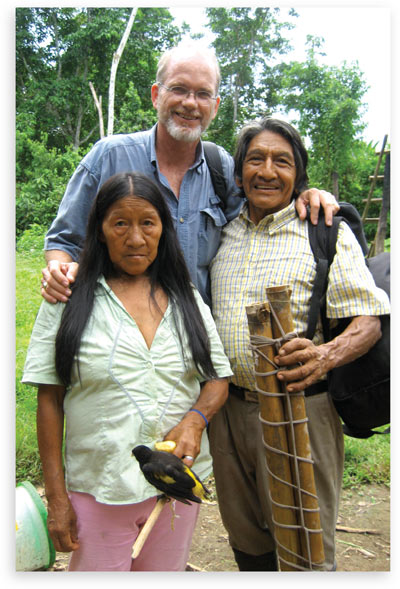
Note: Steve Saint has authored a missions study package titled The Missions Dilemma in which he examines the current model of North American missions and compares it to the biblical approach that Christ modeled for us.
“I can do all this through him who gives me strength.” — Philippians 4:13, 2011 NIV
In cross-cultural church-planting movements, empowerment means helping local believers take ownership of planting and developing churches. It includes equipping Indigenous leaders to lead and sustain thriving Christian congregations within their own communities and cultural settings.
An environment in which empowerment is the goal will be marked by the following:
More mini-essays in the “Doing World Missions Well” series.
E – Elevate those around you with kindness and care.
M – Motivate others to believe they can dare.
P – Provide support, a helping hand.
O – Open your heart to understand.
W – Walk with them through highs and lows.
E – Encourage dreams so their confidence grows.
R – Remember that strength grows stronger when shared.
Like acrostics? Here are more of them.

Do you know what you may be leaving behind on the field when you go on a brief mission trip? Do you know how your hosts in other countries may sometimes feel about you and your visit?
Consider the lesson in this fable about a dancing elephant.
This story illustrates problems that can arise when enthusiastic, results-oriented Americans interact with Christians from other cultures.
By Miriam Adeney
"Would you like to know what it is like to do missions with Americans? Let me tell you a story," said David Coulibaly, a church leader from Mali, West Africa.
Elephant and Mouse were best friends. One day Elephant said, "Mouse, let's have a party!"
Animals gathered from far and near. They ate, and drank, and sang, and danced. And nobody celebrated more exuberantly than the Elephant.
After it was over, Elephant exclaimed, "Mouse, did you ever go to a better party? What a blast!"
But Mouse didn't answer.
"Where are you?" Elephant called. Then he shrank back in horror. There at his feet lay Mouse, his body ground into the dirt—smashed by the exuberance of his friend, Elephant.
"Sometimes that is what it is like to do missions with you Americans," the African storyteller concluded. "It is like dancing with an elephant."
From the Mobilizer


