TL;DR:
Hudson Taylor, a missionary to China, insisted that Christ’s Great Commission is not a suggestion but an absolute command for every believer to make disciples among all nations. Taylor became one of the most influential missionaries in modern Christian history, inspiring generations through his cultural immersion, holistic ministry, and unwavering obedience to Christ’s call.
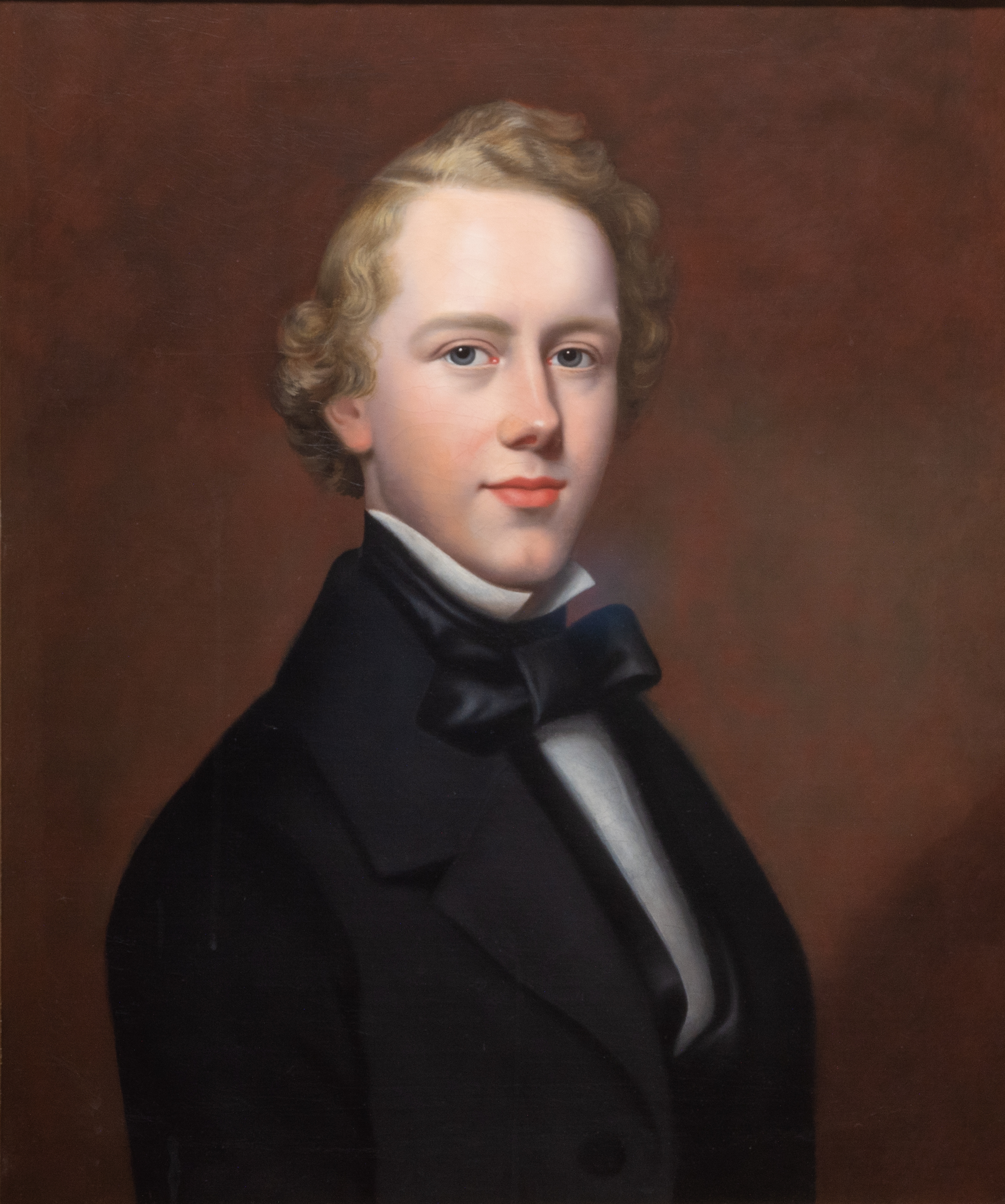
Oil painting of James Hudson Taylor at age 21, created in 1853, not long before he left for China |
Image source
1. Christ’s Great Commission—An Option or a Command?
Missionary Hudson Taylor declared that the
Great Commission is not an optional suggestion but a command Christians must obey.
Hudson Taylor’s passion for evangelizing China’s
inland provinces led him to establish the China Inland Mission.
Taylor believed Christians have no choice but to fulfill
Christ's Great Commission through prayer, giving, mobilizing, sending, and going.
Hudson Taylor's faith-based approach to missionary work influenced later generations of missionaries.
A world evangelism slogan to stir our hearts and move us to action
“The Great Commission is not an option to be considered; it is a command to be obeyed” — often attributed to J. Hudson Taylor
In the mid-nineteenth century, Hudson Taylor emphasized an important truth: Matthew
28:19–20 is not simply one item on a list of suggested Christian activities. Those words of Jesus are the
“Great Commission.” Taylor’s preaching and the work of the China Inland Mission helped make that designation widely familiar, and Jesus’ words constitute a clear command to make disciples among all nations.
Taylor’s declaration reflects his missionary experience in China. Not long after arriving in
Shanghai in 1854, he realized that foreign missionary work was concentrated largely in China’s coastal
cities, while most inland areas remained unreached by the gospel.
Taylor was passionate about obeying the Great Commission. That meant all of China
was to be evangelized. He eventually established his own missionary-sending organization to
send workers into China’s unreached inland regions.
We live in an age of options. Christ-followers can choose among denominations, Bible translations, cover styles, and editions with or without study notes. We do not, however, have an option when it comes to
fulfilling the Great Commission through our praying, giving, mobilizing, sending, or going.
When we make Jesus Lord, we sign on to obey His every command. Obedient believers cannot
consider evangelizing all the world's people groups as something optional.
No obedient believer can say, “World evangelism? That is not my thing.” The Great Commission clearly carries Christ’s authority. In Matthew 28:19, “make disciples” is an imperative, while Mark 16:15 directly commands believers to “go into all the world.” Acts 1:8 adds Christ’s promise that His followers will be His witnesses to the ends of the earth.
The Church's response to the Great Commission is a valuable measure of how fully it is yielded to Jesus as Lord.
More mini-essays in the "Slogans that awakened the Church"
series that appeared in Engage magazine.
What Are the Implications of Calling Matthew 28:19–20 a “Commission”?
Think in military terms. Officers receive commissions that authorize them to carry out particular responsibilities.
It implies authority. A commission is something given by one with legitimate authority to those under that authority.
Calling Matthew 28:19–20 a commission recognizes that Jesus spoke those words as the risen Lord with all authority in heaven and on earth (v.18). Obedience is expected, not optional. Mission flows from Christ’s kingship, not merely from personal passion or preference.
It implies responsibility. A commission is a duty. That means the Church is not simply invited into global witness—it is charged with it. The Great Commission is not something to admire. It is something Jesus entrusted His followers to carry out. Global evangelism and disciple-making are not peripheral programs; they are central to the Church’s identity and responsibility.
It implies an ongoing responsibility. A commission remains in effect after it is given. Jesus promised to be with His followers “to the end of the age.” The task did not end with the first disciples — it extends to each generation. The Church becomes the ongoing instrument of Christ’s mission.
It implies purpose. A commission has a goal. In this case, the goal is clear: making disciples of all nations by going, baptizing, and teaching. Calling Matthew 28:19–20 a commission highlights world missions as central to the purpose of the Church. It is not merely a ministry department or an optional activity.
Calling Matthew 28:19–20 a “commission” carries a set of theological, practical, and missional implications. It does more than label the passage. As Hudson Taylor said, it frames Jesus’ words as an assignment rather than a suggestion.
Key facts about Hudson Taylor
Taylor had a Christian conversion experience at age 17 and soon became convinced that God
was calling him to be a missionary to China.
He then studied medicine, biblical languages, and materials about China to prepare for missionary service.
In 1853, Taylor sailed to China. He eventually founded the China Inland Mission (now
OMF International). That organization was originally focused on evangelizing China's interior
provinces.
Taylor believed that missionaries could connect more effectively with Chinese people by
adopting Chinese dress and adapting appropriately to Chinese customs and ways of life.
Taylor was known for his faith-based approach to mission work. He believed that God
would provide for both his needs and those of his fellow missionaries. He called on missionaries to rely on God
for everything.
Legacy: Taylor's approach to mission work, which emphasized faith and cultural adaptation, greatly influenced later generations of missionaries.
Reflection Questions on Hudson Taylor's Legacy
How would you describe the Great Commission to someone who had never heard about
it? How would you explain why it is important for Christians to obey it?
In what ways might Hudson Taylor's experience in China have formed his understanding of the Great Commission?
In what ways can it be said that today's Christians have options and choices when it comes to fulfilling the Great Commission?
How did Hudson Taylor's approach to mission work influence later generations of missionaries?
The conversion of James Hudson Taylor
Hudson Taylor founded the China Inland Mission out of his zeal to move beyond the
coastal cities to the immense unreached interior of that Asian country.
"For a time in his early teens, it seemed that young Taylor might not respond to the family
tradition and to his rearing. To be sure, in later years, he said that many times he had tried to
make himself a Christian but had failed and that when he was about 14 years of age, he had given
himself to God. However, some months later, he began to think that he could not be saved and
that he had best take his 'fill of this world.'
"It was in this frame of mind that he worked for a time in the local bank. There, under the
influence of associates, he became skeptical and gave to himself as the reason for the inconsistencies
of Christians, who, professing to believe the Bible, actually lived as though there were no such
book. Then, when seventeen, in other words, not too far from the age at which Carey and Mills
were struggling their way to faith, came a transforming experience.
"One holiday, while alone in his father's library, Taylor picked up a gospel tract hoping for an
interesting story before the inevitable moral at the end. As he read, the phrase the finished
work of Christ caught his attention. He asked himself: 'What is finished?'
"Reared as he had been, the answer came quickly to him: 'A full and perfect
atonement and satisfaction for sin; the debt was paid by the Substitute; Christ died for our sins,
and not for ours only, but also for the sins of the whole world.' Then flooded in the joyous
conviction that if the whole work was finished and the whole debt paid, all that was left for him
to do was to accept it. That he did and fell on his knees, praising God.
"He soon discovered that at that very hour in a distant town,
his mother, driven by an inner compulsion to pray for him, had had the quiet assurance that her
prayer had been granted. A little later, he also learned that his sister Amelia had, for exactly a
month, been praying for his conversion. All of this helped to give him confidence in [the
possibility of] concrete answers to explicit requests in prayer." —
from Kenneth Scott Latourette, These Sought a Country, p. 64
Taylor's call to inland China
"On Sunday, June 25th, 1865, unable to bear the sight of a congregation of a thousand or
more Christian people rejoicing in their own security, while millions were perishing from lack of
knowledge, I wandered out on the sands alone, in great spiritual agony; and there the Lord
conquered my unbelief, and I surrendered myself to God for this service.
"I told Him that all the responsibility as to issues and consequences must rest with Him; that as
His servant, it was mine to obey and to follow Him — His to direct, to care for, and to
guide me and those who might labor with me. Need I say that peace at once flowed into my burdened heart?
“There and then, I asked Him for twenty-four fellow workers, two for each of eleven inland provinces (of China) which were without a missionary, and two for Mongolia, and writing the petition on the margin of the Bible I had with me, I returned home with a heart enjoying rest such
as it had been a stranger to for months, and with an assurance that the Lord would bless His own work and that I should share in the blessing."
— J. Hudson Taylor, quoted by Kenneth Scott Latourette in These Sought a Country, p. 74
How Might Hudson Taylor's Life and Ministry Help Missionaries Today?
Hudson Taylor, a nineteenth-century British Protestant missionary to China, is regarded as one of the most influential missionaries in modern history. Seven aspects of his life and ministry offer valuable lessons for today’s cross-cultural missionaries:
Taylor fully immersed himself in Chinese culture. He adopted Chinese dress and hairstyle and learned the language and customs. His willingness to identify with the local culture communicated deep respect for the people he sought to reach.
Hudson Taylor was known for his reliance on prayer. He founded the China Inland Mission, now OMF International, while depending on prayer for financial provision and spiritual guidance.
Taylor demonstrated remarkable adaptability in his cross-cultural ministry. He understood that the Christian message needed to be communicated in culturally appropriate ways if it was to be clearly understood by Chinese people.
Hudson Taylor lived a life of sacrifice. He endured personal hardships and major challenges in his missionary work. His all-out commitment to making Christ-like disciples in China should remind us today of the sacrifices required in cross-cultural ministry.
Hudson Taylor recognized the importance of meeting both the spiritual and physical needs of the people he served. The China Inland Mission's holistic approach to ministry included medical care and other forms of practical service alongside evangelistic efforts.
Taylor faced persecution, illness, financial difficulties, and other setbacks, yet he persevered in cross-cultural missionary service with faith and resilience.
Hudson Taylor’s life and ministry illustrate principles that remain relevant for today’s cross-cultural missionaries: cultural sensitivity, prayerful dependence on God, adaptability, sacrificial commitment, empowerment of indigenous leaders, holistic ministry, and perseverance through adversity.
Tributes to Hudson Taylor
“Because [Hudson Taylor] remained lowly in his own eyes, God was able to take that beloved man and make him a prince, if I may say so, among all the missionaries of the Victorian era.” — Arthur Glasser, quoted in “Hudson Taylor: An American Tribute,” Christianity Today, June 18, 1965, p. 20.
“Mr. Taylor…is not in outward appearance an individual who would be selected among others as the leader of a gigantic enterprise; in fact, he is lame in gait, and little in stature; but…his spirit is quiet and meek, yet strong and intense; there is not an atom of self-assertion about him, but a firm confidence in God.” — Charles H. Spurgeon, quoted in Hudson Taylor in Early Years: The Growth of a Soul by Howard Taylor, p. 329.
“No other missionary in the nineteen centuries since the Apostle Paul has had a wider vision and has carried out a more systematized plan of evangelizing a broad geographical area than Hudson Taylor.” — Ruth Tucker, From Jerusalem to Irian Jaya: A Biographical History of Christian Missions, Zondervan, p. 73.
“[Hudson Taylor] was primarily a man of God — the God of the Scriptures. A life filled with Bible study, prayer, vision, and faith made him venturesome and hopeful.”
— Arthur T. Pierson, quoted in “Hudson Taylor: An American Tribute,” Christianity Today, June 18, 1965, p. 21.