Historical context: This essay describes the Church of the Nazarene in Haiti when the essay was written. Unless otherwise indicated, statistics, organizational arrangements, and references to recent events reflect that period.
TL;DR:
This essay reflects on decades of remarkable growth in the Church of the Nazarene in Haiti. Three factors contributing to that growth were (1) a passionate lay-led evangelistic movement where witnessing for Christ is part of daily life; (2) shared language and cultural traditions, together with an awareness of the supernatural; and (3) a widespread church-planting mentality focused on reaching the "next village." The essay also highlights lay participation, vibrant Spirit-filled worship, and bivocational leadership that prioritizes outreach.
"So the churches were strengthened in the faith and grew daily in numbers." — Acts 16:5 (NIV)
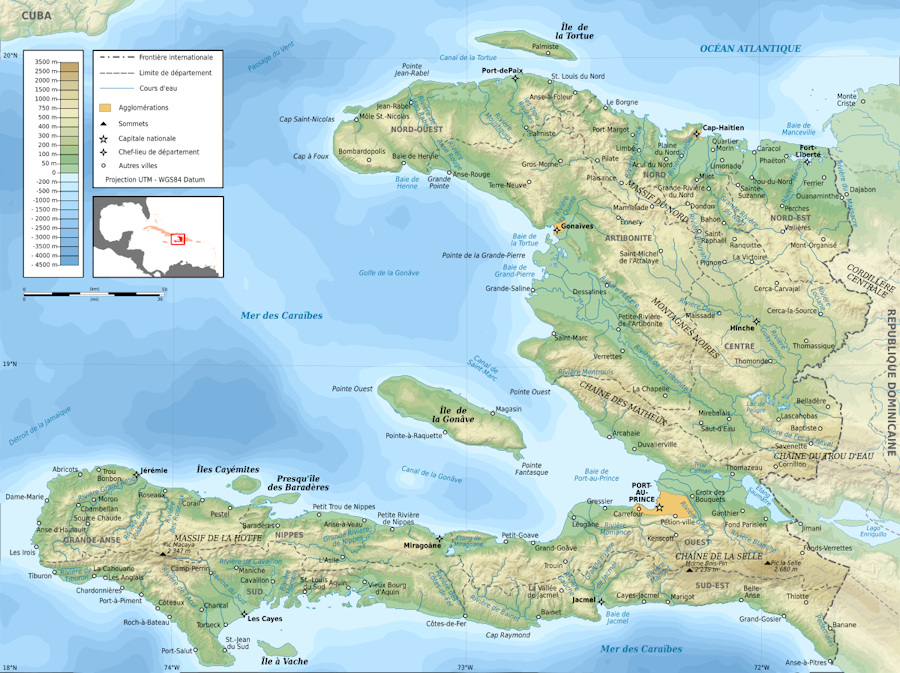
It was a Saturday evening, and I was sitting in the back of a Haitian church building on the island of La Gonave. I had gone to that little island off the coast of Haiti to visit the church in Zabriko, a little village up in the mountains.
This particular Saturday evening, the church was having its monthly members' meeting. The next morning, communion would be served during the worship service. By getting everyone together on the Saturday nights before a communion service, the church leaders hoped to clear up problems. This was intended to help the congregation prepare spiritually to celebrate the Lord's Supper.
At that members' meeting, the main matter for discussion was a man asking to be restored to full participation in church life. Three months before, he had been caught in adultery. His infidelity damaged his family relationships. Church members felt betrayed, and it hurt the church's testimony in the village. Because of that, the man had been strongly disciplined. He had been barred from public ministry in the church. He couldn't sing any special songs in services or give any kind of public testimony.
Three months had gone by, and now he had come to the membership meeting asking for reinstatement. Neither the pastor nor the church board wanted to take full responsibility for the decision. So they had referred it to the entire membership.
When the meeting started, they asked him to sit in a chair up at the front of the little church building. Several members of the congregation asked him some pointed questions. At the end of the discussion with him, they concluded that he wasn't really repentant of his sin nor sorry for the disgrace he had brought upon the church. They had the impression that he was sorry to have been caught and that he just wanted to be back in everybody's good graces. So, they told him to come back in another three months to another all-church meeting.
With such public questioning of church members, one could be tempted to think that church growth in Haiti would be somewhat limited. One might think that people would be reluctant to join or would quit when confronted with such strict discipline.
That was not what I observed, however. Quite the opposite. The Church of the Nazarene in that little Caribbean island nation had experienced astounding growth. Over the thirty-year period covered by this essay, Haitian Nazarenes had averaged ten percent growth per year.
When this essay was written, the church in Haiti had nine districts and more than 800 local churches. What factors had contributed to that growth?
During our five years in Haiti as missionaries, I saw at least eight major transferable or reproducible church growth principles at work in Haiti. These are:
For these Christians, talking about Jesus and His work in their lives is part of what they do in the marketplaces or in the fields. Haitian believers share the gospel in everyday conversations. Witnessing is not confined to special times of the day or week. Few Haitian Christians have studied witnessing in any kind of special training course. Yet, they are successfully winning their village neighbors to the Lord.
The visible discipline used by local churches may even create a sense that being a member in good standing is something special and a status to be desired. Prospective members must attend a membership class and maintain almost perfect church attendance through a probationary period prior to their baptism and reception into church membership.
Acrostic: Meaning of Baptism
A widely shared language and many shared cultural traditions helped Haitian believers communicate the gospel across communities. Haitian Creole provided a common language for ministry, although differences in education, income, and social status could still create barriers.
One factor that may have contributed to receptivity to the gospel was the importance of the supernatural in Haitian cultural and religious life. Vodou formed part of that religious landscape, alongside Catholic and Protestant traditions. Vodou practitioners honor spirits, and spirit possession is part of some ceremonies. (See this discussion of spirit possession.) This spiritual awareness provided a point of contact for Christian witness.
This awareness provided opportunities to talk about the God who sent His Son to die for our sins and who now lives within us through His Holy Spirit.
Both pastors and lay members have a next-village mentality. That is, they are always thinking about how to start a Bible study or evangelistic group in the next village. Following in the steps of John Wesley, they think as much about starting new groups as they do about winning individual converts.
Most Haitian pastors do not think of themselves as pastors of a single church. Rather, they see themselves as being responsible for a particular area and are committed to planting as many churches as necessary to reach that area.
Many Haitian pastors preach only once a week. Lay members lead the other services of the week with the preacher or exhorter being one of a group of lay members that the pastor is training.
The Haitian church places a heavy emphasis on lay participation in all areas of ministry, including preaching and especially in evangelism and church planting. Many of the Nazarene churches planted each year in Haiti will have been started by lay members who aspire to be pastors.
While we do have a residential Bible school, much of the training for local pastors is provided by a Theological Education by Extension program where the school goes to the student. Often, pastors studying in that program return home and, two days later, teach their lay preachers what they have just learned.
Visitors to Haitian churches often go away talking about the excitement of those services with joyous rhythmic singing and sermons punctuated by frequent responses from the audience.
Haitian church services are defined by a strong sense of the presence of the Holy Spirit. In addition to lots of activities throughout the week, local churches use frequent revival meetings and evangelistic crusades in their own towns and in neighboring villages where they hope to plant churches.
One major evangelistic effort reported when this essay was written involved eight simultaneous large crusades all across Haiti. Total attendance in those crusades reached 35,000. The results of these crusades included the planting of about half a dozen new churches.
When this essay was written, none of the nine district superintendents in Haiti served exclusively in that role. All also pastored churches, and some ran businesses. Not having time for everything, these superintendents had developed a focus on the critical few activities that promote evangelism, growth, and outreach. They had needed to find innovative ways to delegate major responsibilities and to involve local churches in extension growth. One of their key tools was the use of strong zone or area pastors in dealing with problems and helping struggling churches.
Buildings, though seen as important in Haiti, are somewhat secondary to the winning of the lost.
When this essay was written, most Nazarene churches in Haiti operated an elementary school. There were 220 of these schools with 25,000 children enrolled. In addition, three districts operated vocational schools offering training in carpentry, welding, tailoring, baking, and secretarial skills. Several churches operated small rural health clinics, and some also undertook small agricultural projects.
Three thousand people baptized on a single day? It happened on the Day of Pentecost. A similarly large baptismal celebration took place in Haiti before this essay was written. On a Sunday in September, Nazarene churches across the country all held baptismal services. On that one Sunday morning, Nazarene pastors baptized nearly three thousand people (2,794 to be exact). The biggest service of that tremendous day was a district-wide one at Gonaives in north-central Haiti. There, down at the beach, one thousand people were baptized after testifying to Christ's saving power.
What an impressive evangelistic harvest these experiences illustrate in that small nation.
"I tell you, open your eyes and look at the fields! They are ripe for harvest." — John 4:35 (NIV)
— Howard Culbertson, hculbert@snu.edu
For decades, Haiti has witnessed a surge in evangelical Christianity. Traditionally dominated by Catholicism and Vodou, that Caribbean country has experienced a shift in religious dynamics. Evangelicalism's rise in Haiti has been helped by factors such as an emphasis on personal conversion experiences, dynamic worship styles, and grassroots outreach efforts by lay believers.


