TL;DR:
Effective hunger relief combines emergency assistance with lasting solutions. I give through my local Nazarene church because I value its community relationships, holistic ministry, and accountability. Nazarene Compassionate Ministries supports work addressing food, clean water, education, and spiritual needs. Its published policy commits a huge percentage of all funds raised to compassionate ministry projects.
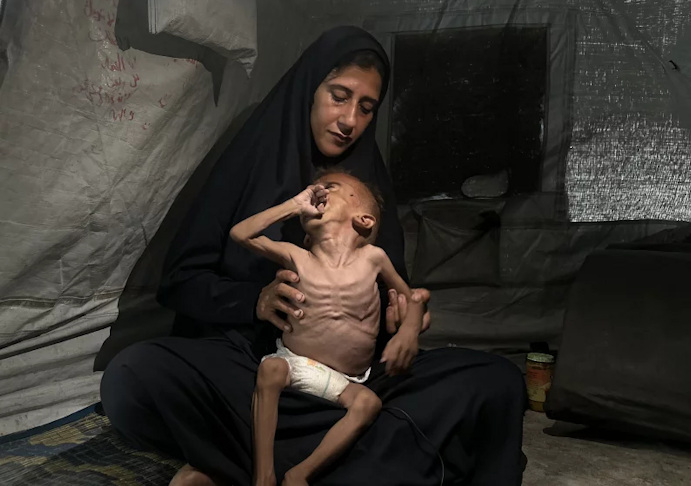
The emaciated little girl looks longingly at you from the magazine page. Disheveled and barefoot, she reaches toward you with an empty bowl. She's hungry. Just below that heart-rending photo is an organization's contact information. You want to help. So, you reach for your phone or checkbook.
But wait a minute. When you send a check or authorize a credit card payment, will your gift actually help her? How much will support effective relief, and how much will cover fundraising and administration? Are those expenses reasonable and clearly reported?
Pictures of hungry children can move us to give generously. Yet compelling advertising can conceal ineffective programs, poor management, or even fraud. Compassion should prompt us to help, and careful investigation should guide our choice of an organization.
Money raised in the name of hungry children does not always reach effective programs. Donors need more than an emotional appeal: they need evidence that an organization uses its resources responsibly.
Publicity can also be misleading. In one case, a Nazarene missionary was glancing through an advertising brochure of an organization that purportedly was supporting "national workers" all over the world. The missionary found himself looking at photos of Nazarene churches and schools from his area, none of which were receiving funds from this independent group. Careful cropping of the pictures had eliminated church and school signs on which the word "Nazarene" appeared.
In some other cases, the money does get overseas, but because of fraud there, it doesn't feed malnourished children. During our years in Italy, for instance, we had contact with an American organization that raised money to feed and clothe "refugees." Around the time we arrived there, three of our Nazarene pastors were forced to resign, one for adultery, another for theft, and the third for embezzlement. Unrepentant and unwilling to submit to church discipline, all three of those men managed to convince that particular "refugee" mission to pay them a monthly salary as "national evangelists." Those arrangements raised serious questions for me about how carefully the organization investigated the people it supported.
So how can you know you are really feeding that starving child? Can you have any assurance that the money you're giving is actually going to fight the spreading plague of world hunger?
Fortunately, a few key questions can help clear away any deceptive smoke screens. As a family, we've made a decision to channel all our charitable giving for world hunger through the Church of the Nazarene. Let me explain.
Emergency food assistance can save lives. A lasting response to hunger must also protect local livelihoods and help communities strengthen their ability to feed themselves. Poorly planned food distribution can undermine local markets.
Consider the little girl in the magazine picture. Her parents may be farmers who depend on selling produce from a small plot. If imported food is distributed without regard for local conditions, buyers may stop purchasing the family's crops. Aid intended to help could then reduce the family's income and increase its dependence on outside assistance.
This does not mean withholding food from people in immediate danger. Timely nutritional support can be lifesaving. The challenge is to meet urgent needs while planning assistance with local communities and considering its effects on their livelihoods.
A lasting response to hunger should include support for local food production where feasible. Farmers may benefit from access to resources and opportunities to share knowledge about soil conservation, composting, crop rotation, harvesting and storage, irrigation, and marketing cooperatives. I value an approach that works alongside local people and builds on their experience.
It is also important to remember that malnutrition is more than a problem of the quantity of food. It's more than an issue of the number of calories. Many times, chronic malnutrition results from an improperly balanced diet. Some of your world hunger dollars should be going to help malnourished people find ways to balance their diets. During our years in Haiti, trained Nazarene nutritionists helped people address these needs. That's one of the reasons I give through the Church of the Nazarene.
Even producing more and better food and making sure people eat balanced diets will not by itself eliminate the hunger problem. Contaminated water supplies and intestinal parasites compound the effects of malnutrition. High levels of illiteracy cripple educational efforts aimed at rural farmers. Unjust laws and corrupt government officials can also callously trap people at poverty levels.
Family relationships also affect whether children have enough to eat. During our years in Haiti, we saw how abandonment by fathers could leave mothers and children without adequate support. The clear preaching of a life-changing gospel can help address these patterns by calling people to responsibility and transformed relationships. Churches can reinforce that message through practical care for vulnerable families. See The Kingdom of God strikes back in Haiti.
Many societies around the world are in desperate need of radical changes. Spiritual transformation through the power of the Holy Spirit can help people pursue these changes in their families and communities. That's why I give through the Church of the Nazarene. My world hunger dollars link up with my World Evangelism Fund giving to impact the whole person: body, mind, and soul.
Even well-intentioned organizations can be deceived by dishonest intermediaries. During our years in Haiti, we encountered people sometimes called "post office pastors." They solicited support from overseas donors for supposed ministries but used the money for themselves. Such experiences taught me the importance of local knowledge, careful oversight, and verified relationships.
When I give through the Church of the Nazarene, my gifts go through people I know I can trust. We meet global church leaders at district assemblies and other gatherings. We meet national leaders from around the world at General Assemblies. We regularly mingle with missionaries on home assignment. The Church of the Nazarene is truly a large international "family." I feel good about entrusting my money to its leaders worldwide.
Effective ministry requires responsible administration. Coordinating programs, training staff, monitoring results, communicating with donors, and reporting finances all cost money. The important questions are whether those costs are reasonable and whether the organization explains how it uses its funds.
According to Nazarene Compassionate Ministries' published financial policy, the bulk of the funds it receives supports programming, with only a minimal amount used for program administration and donor engagement. NCM also states that it is self-funded within the Church of the Nazarene and receives no supplemental funding from the general church. My confidence should therefore rest on accountable stewardship and effective ministry rather than on a claim that every dollar goes overseas.
Years ago, I received a fundraising appeal from a religious organization seeking support for hungry children. It promoted a drawing in which donors could win a new Chevrolet. The appeal left me wondering how much attention and money were going toward attracting donors rather than meeting children's needs.
That experience reinforced my desire to evaluate how organizations raise money as well as how they spend it. I want to support ministries whose fundraising practices reflect their mission and whose reporting allows donors to make informed decisions.
Hunger remains an urgent concern. According to the World Health Organization, undernutrition is linked to nearly half of deaths among children under five worldwide. As Christians, we cannot sit idly by. Our response should combine generosity with discernment.
Be the best possible steward of your resources. Investigate the organizations you support, ask how they assess their work, and look for evidence that they serve people responsibly. For these reasons, I channel my world hunger giving through my local Nazarene church, and I encourage others to do the same.
"And he took the children in his arms, placed his hands on them and blessed them." -- Mark 10:16 (NIV)
Adapted from a prayer by Ina Hughes
"Truly I tell you, unless you change and become like little children, you will never enter the kingdom of heaven." -- Matthew 18:3 (NIV)

Shepherd Community in Indianapolis is "big on compassion." At least, that's how one of the members of this inner-city work describes it. [ more ]
TED Talk: Admitting failure in international aid programs
As Nazarene missionaries in Haiti, we partnered with two wonderful organizations: Compassion International and World Vision. What did we appreciate about their work?
In Haiti, we also saw donor money being wasted by organizations that fell short in these areas.
Generosity is most effective when joined with careful investigation. Do not give solely on the strength of an emotional appeal. First examine the organization's accountability, financial reporting, and effectiveness. Look for an approach that combines emergency relief with lasting solutions, including support for local livelihoods, clean water, education, and adequate nutrition.
My experience with the Church of the Nazarene gives me confidence in supporting its compassionate ministries. I value its local relationships and commitment to the whole person. Those convictions also remind me to ask thoughtful questions, read financial reports, and pay attention to results. Whether giving through our denomination or another trustworthy organization, we can practice responsible stewardship and help children and families build a better future.
-- Howard Culbertson, hculbert@snu.edu


