TL;DR:
Paul Orjala, a missionary to Haiti, modeled a distinctive approach to missions by empowering local leadership rather than overseeing or controlling it. He saw himself as an advisor and encourager, enabling Haitians to lead their own churches and ministries. His emphasis on local ownership and culturally authentic expressions of faith produced lasting, self-sustaining growth in the Haitian church. The page includes an acrostic on indigenization.
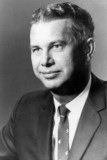
Paul Orjala (1925–2005) and his wife, Mary, were pioneer missionaries for the Church of the Nazarene in Haiti. A gifted pianist, he was also a linguistic scholar of Haitian Creole. After 14 years in Haiti, he became the world missions professor at Nazarene Theological Seminary in Kansas City, a position he held for 21 years. He then taught at Point Loma Nazarene University for seven years. He authored several books on missionary work.
"Do not bring us the gospel as a potted plant," Murthi told missionaries working in India. "Bring us the seed of the gospel and plant it in our soil."
Murthi had watched missionaries import "standard operating procedures" and programs (which they themselves often directed) with little critical reflection on whether those things could be sustained locally. Murthi wanted churches in India to flourish in homegrown ways.
Murthi's picturesque statement reflected a desire for both contextualization and indigenization in churches in India. Contextualization concerns how forms may be shaped or altered to accomplish the same function in different cultures. Indigenization—whether in a church, community development, or commerce—means that local people have enough decision-making authority to feel genuine ownership. Both are processes through which people express and lead the Christian faith within their own cultural setting.
Healthy church-planting movements generally have a high degree of indigenization. Paul and Mary Orjala's 14 years of ministry in Haiti exemplify how expatriate (foreign) missionaries can make indigenization a reality.
The Orjalas went from the United States to Haiti in 1950. Western missionaries of that time often started a congregation or a ministry and led it for many years. Eventually, with much trepidation, the missionaries would step aside and turn their "baby" over to a local person. Paul Orjala's modus operandi stood in stark contrast to that style of missionary ministry. Though he helped the Nazarene church expand throughout Haiti, Paul Orjala never pastored a local congregation there.
Overflowing with energy and creativity, Paul saw himself as an advisor and consultant to the Haitian church, rather than its leader. He never thought of the Haitian Nazarene movement as his "baby." From the start, he empowered local leaders who emerged naturally. Indeed, he intentionally avoided assuming responsibilities that Haitian leaders could carry.
Paul Orjala respected Haitian leaders and deferred to their judgment. He participated with them in developing strategies and planning programs, but he neither dictated decisions nor positioned himself as their gatekeeper. He trusted the Holy Spirit to guide the Haitian church.
To be sure, indigenization for Orjala did not mean separation from the larger denomination. Paul, who went on to become a professor of missiology at Nazarene Theological Seminary in Kansas City, Missouri, believed the church in Haiti could and should be both fully Nazarene and authentically Haitian.
At a time when groups of missionaries tended to cluster in one place, Paul Orjala wanted only a limited number of Nazarene missionaries in Haiti. One reason was to make sure programs and structures could be supported locally.
For more than seven decades, the Haitian Nazarene church has seen consistent, well-above-average growth. Haiti's population is somewhat larger than that of the greater Chicago metropolitan area. By 2025, Haiti had 800 Nazarene churches. That growth is due, at least in part, to Paul Orjala's insistence that indigenization be a key characteristic of the Church of the Nazarene in Haiti.
This essay was originally published in Engage, an online world missions publication of the Church of the Nazarene.
For more, get the book Paul Orjala: The Man, the Mission, a biography by Franklin Cook.
Another missionary pioneer like Paul Orjala was Herman Gschwandtner, who helped start Nazarene gospel outreach in Russia, Eastern Europe, and South Asia.
"The ultimate goal in contextualization is to help a . . . group (of people) learn how God can be a real part of their everyday life as they practice biblical faith." — Dean Gilliland
Based on material in To Spread the Power: Church Growth in the Wesleyan Spirit by George Hunter III
Missionary Paul Orjala embraced the principle of indigenization long before it came into vogue among Western missionaries. He focused on empowering local leaders and emphasizing local ownership within the Haitian church. Unlike many of his contemporaries, Paul saw himself as an advisor and consultant, not as the leader. His approach to ministry contributed to consistent, well-above-average growth in the Haitian Nazarene church. In 2023, the Nazarene General Secretary's office reported that Haiti's 755 Nazarene churches had a total of 102,131 members.
Paul Orjala's legacy reminds us of the need to emphasize contextualization and indigenization in cross-cultural church-planting movements. These two processes help the gospel take root and flourish in culturally meaningful ways.
— Howard Culbertson, hculbert@snu.edu
I — Indigenous leadership grows from within,
N — Not imposed by outsiders, but shaped by kin.
D — Doctrine finds voice in local song and speech,
I — Incarnating truth in ways hearts can reach.
G — Grace takes form in every culture's frame,
E — Expressions vary, but the gospel stays the same.
N — New believers serve with their own insight,
I — Inspired by Scripture, empowered by Light.
Z — Zeal for Christ reflects each land’s own hue,
A — As worship grows in customs old and new.
T — The Church becomes truly home and near,
I — Interweaving faith with what people hold dear.
O — Ownership thrives where local roots can grow,
N — Nurturing disciples whose faith continues to show.


It happened on this date in January | February | March | April | May | June | July | August | September | October | November | December