TL;DR:
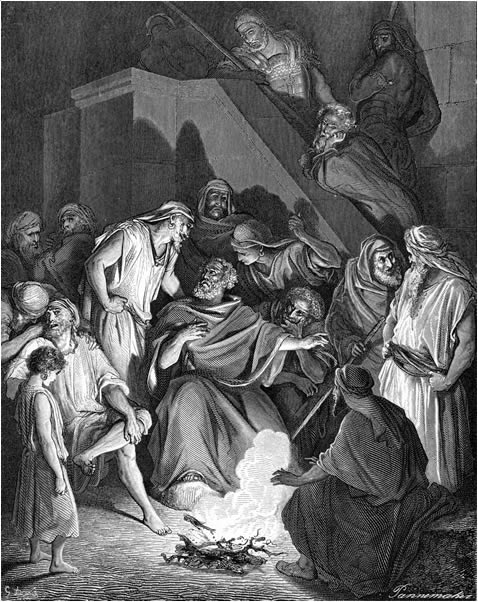
Peter’s denial that he knew Jesus (Luke 22) reminds us not to rely on our own strength but to depend fully on Christ. Bold declarations of faith, like Peter’s pledge to die with Jesus, can falter when tested, especially when such declarations are rooted in self-confidence rather than divine strength.
How can Peter's denial that he knew Jesus help us be better Christ-followers today?
A few hours later that same night:
"So, if you think you are standing firm, be careful that you don't fall! No temptation has overtaken you except what is common to mankind. And God is faithful; he will not let you be tempted beyond what you can bear. But when you are tempted, he will also provide a way out so that you can endure it."
"Whenever I get too sure of myself in whatever I do—whether it is preaching or teaching or something else—I usually fall flat on my face … in the mud … and get trampled by horses."
It was the night before the crucifixion of our Lord. Jesus and His disciples celebrated their last Passover together. In what should have been a sacred moment, the disciples began arguing about which of them should be considered the greatest. Their voices may even have risen as their disagreement intensified.
Jesus corrected their mistaken ideas about greatness and then turned His attention to Peter. Perhaps with deep emotion, Peter declared that he was ready to go to prison and even die for Jesus.
As I read this narrative in Luke 22 and the painful account of Peter's denials that follows, I'm reminded of testimonies I heard years ago in youth camps. Many of these testimonies sounded much the same: "I love the Lord with all my heart, and I'm going all the way with Him."
Our voices had a convincing ring to them, just as Peter's undoubtedly did. We were sure that we would remain strong Christians. The trouble was that, once we'd gone home from youth camp, we didn't withstand the pressures of the world much better than Peter did around that courtyard fire.
Peter's error—and ours as well—was not in the intention to be faithful. No one could fault us for that. The error lay in our being too sure of our own strength and resources rather than relying on Jesus.
We failed to understand (as did Peter) that we cannot follow Jesus by relying solely on human strength and wisdom. We teenagers, like Peter, had not yet fully understood the meaning of Jesus' mission and its ramifications for our relationship with God. Jesus calls us to be servants like Himself, empowered by His Spirit. He does not call us to argue over who is the greatest.
Of course, we can take comfort in what this passage shows us about Jesus' love and compassion toward His followers, even when they fail to comprehend important spiritual truths. Jesus knew that Peter would deny Him within a few hours. Yet Jesus spoke to Peter with love and compassion.
The fact that our Lord is like this should spur us on to guard against selfish ambition or presumption in our spiritual lives—against our being too sure of ourselves.
During our first home assignment back in the USA from Italy, I spent a few days with my longtime friend, Glen Jones, who was then the district superintendent of the East Tennessee District.
Glen Jones was gifted as an evangelist. He therefore spent part of each year preaching in local church revivals and at district camp meetings. While I was with him during that home assignment, he told me about an encounter with a young evangelist. The young man seemed quite confident that he was a good preacher, just as good (if not better) than Dr. Jones. The young man asked Dr. Jones, "How does one get invited to preach at the 'big' camp meetings?" I do not remember Dr. Jones’ answer, but perhaps the unanswered question makes the point: recognition is not something we can demand.
Of course, it's not only brash young preachers and pre-Pentecost disciples who are guilty of selfish ambition or presumption. The devil can trip up any of us by leading us to become too sure of ourselves.
DrIn the process, we risk missing valuable spiritual growth opportunities. Remember the disciples? They squandered precious time with Jesus by arguing about which of them was the greatest.
Truly great Christians will take the path of service. When they do, they'll discover the divine footprints of the Master there before them.
— Howard Culbertson, hculbert@snu.edu
I wrote this devotional while Barbara and I were serving as missionaries in Italy. It is one of a series of 52 brief devotionals published in The Standard, the weekly Faith Connections take-home piece for adult Sunday school classes produced by the Church of the Nazarene.
First Corinthians 10:12–13 offers timeless wisdom for handling life's challenges. In these words to Christians in Corinth, the apostle Paul cautions against complacency. He urges us not to think we are immune to temptation or failure. Instead, he reminds us that human struggles are universal and that we must stay vigilant. This message matters today, when distractions and temptations abound. His words call us to remain humble and vigilant. We must acknowledge our vulnerability while seeking strength and guidance from God. Moreover, the promise of divine assistance in overcoming adversity provides comfort and encouragement for believers facing trials and tribulations.


