Christianity versus culture: Classic attitudes
TL;DR:
Christians have taken varied approaches to relating to culture, ranging from rejecting it entirely to seeking to transform it. Classic frameworks by H. Richard Niebuhr (1951) and Charles H. Kraft (1981) outline models such as Christ against culture, Christ in culture, Christ above culture, paradox or dualism, and Christ transforming culture. Other perspectives include separatism (rejecting culture), accommodationism (working within it), transformationalism (changing it), dualism (separating sacred and secular), critical engagement (affirming what aligns with faith while rejecting what does not), and contextualization (expressing the gospel in culturally understandable ways).
Faith and its relationship to the broader culture
- Christians have had different points of view regarding engagement with culture.
- Two classic books—one by H. Richard Niebuhr in 1951 and another by Charles H. Kraft in 1981—describe ways Christians have understood their relationship to the surrounding culture.
- How should Christians view and interact with their surrounding culture?
- Christian viewpoints about the surrounding culture have included opposition, transformation, coexistence, and dualism.
“Therefore, ‘Come out from them and be separate,’ says the Lord.” — 2 Corinthians 6:17
How should Christians view the surrounding culture? Do we go to war with it? Should we insist that it be “Christianized”? Do we live in an uneasy truce with it?
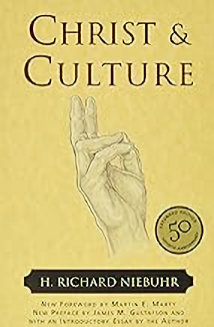
Two classic books can help us think through these questions. In 1951, Yale professor
H. Richard Niebuhr wrote a book outlining five positions Christians have historically taken on the
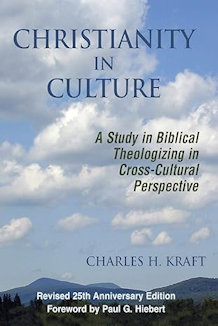
issue. Thirty years later, Fuller Theological Seminary missiologist Charles Kraft wrote a book to
show that the religion-and-culture debate was not unique to Christianity. Kraft recast
Niebuhr's discussion into four broad categories, using God rather than Christ as his framing terminology. Here is a listing of the Christ-and-culture positions presented by Niebuhr and Kraft.
H. Richard Niebuhr's 1951 book—Christ and Culture
- Christ against culture
- The Christ of culture
- Christ above culture
- Christ and culture in paradox
- Christ, the transformer of culture
Charles H. Kraft's 1981 book—Christianity in Culture
- God against culture
- God in culture
- God (or Christ) is merely a culture hero
- God is contained within, or at least endorses, one particular culture
- God above culture
- Deism and some African cultures
- Follow the requirements of both Christ and culture, but each in its own place.
- Dualism—the only real solution to the paradox lies in the future. The Christian is like an amphibian
living in two realms.
- Culture is corrupted but convertible.
- God above-but-through culture
PowerPoint with this material
How to be used by God in ministering to the dying

Death and dying offer extraordinary opportunities and challenges for ministry. [
more ]
— Howard Culbertson, hculbert@snu.edu
Six More Ways Christians Approach Culture
Throughout history, Christians have adopted various points of view toward the broader cultures in which they have lived. Those approaches have included the following:
- Some Christians view the broader culture as fundamentally opposed to their faith. They therefore choose to separate themselves from it. They may see the larger culture as corrupt or irredeemably sinful. Because of that, they set up strict boundaries to protect their religious identity. This perspective often stresses purity and holiness. It is sometimes called the separatist or exclusivist view.
- Other Christians take a more accommodating approach. They seek to engage constructively with the broader culture from within. They believe that aspects of the culture can be compatible with Christian values and seek common ground that they can use to influence society positively. This perspective emphasizes dialogue, cultural relevance, and adaptation. This mindset is often called accommodationist or inclusivist.
- Some Christians adopt a transformationalist view. This view combines elements of separatism and accommodationism. People with this perspective believe in engaging with the broader culture while seeking to transform it according to Christian principles. This perspective often involves active participation in societal institutions and working for equality, social justice, and change.
- A dualistic view divides the world between the spiritual and the secular. The secular is seen as naturally flawed or evil. Christians holding this perspective may engage with the broader culture to varying degrees but maintain clear distinctions between the sacred and the profane.
- Some Christians adopt a critical engagement approach. This involves understanding and evaluating elements of the broader culture while affirming and participating in aspects not contrary to Christian values. This perspective seeks a balance between cultural engagement and careful Christian discernment.
- In contexts where Christianity is interacting with diverse cultures, contextualization is stressed. This involves expressing the Christian message and practices in culturally understandable ways while preserving core theological and ethical principles.
These approaches are not necessarily mutually exclusive. Theological convictions, cultural contexts, and personal experiences may lead Christians to combine elements of several perspectives.
Related articles
You might also like these