More classic art masterpieces used as illustrations
TL;DR: The Israelites’ slavery in Egypt illustrates how people can get trapped in places where they don’t belong—just as sin traps us today. Staying in sin makes life increasingly bitter and enslaving, but God offers freedom through Jesus Christ. God’s promises endure.
What can the story of the Israelites’ long stay in Egypt teach us?
1 These are the names of the sons of Israel who went to Egypt with Jacob, each with his family: 2 Reuben, Simeon, Levi and Judah; 3 Issachar, Zebulun and Benjamin; 4 Dan and Naphtali; Gad and Asher. 5 The descendants of Jacob numbered seventy in all; Joseph was already in Egypt.
6 Now Joseph and all his brothers and all that generation died, 7 but the Israelites were exceedingly fruitful; they multiplied greatly, increased in numbers and became so numerous that the land was filled with them.
8 Then a new king, to whom Joseph meant nothing, came to power in Egypt. 9 “Look,” he said to his people, “the Israelites have become far too numerous for us. 10 Come, we must deal shrewdly with them or they will become even more numerous and, if war breaks out, will join our enemies, fight against us and leave the country.”
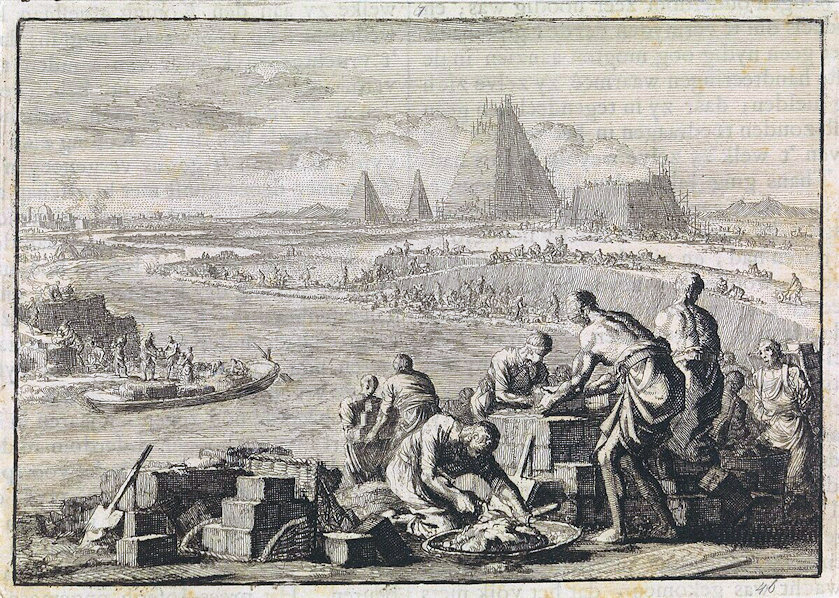
11 So they put slave masters over them to oppress them with forced labor, and they built Pithom and Rameses as store cities for Pharaoh. 12 But the more they were oppressed, the more they multiplied and spread; so the Egyptians came to dread the Israelites 13 and worked them ruthlessly. 14 They made their lives bitter with harsh labor in brick and mortar and with all kinds of work in the fields; in all their harsh labor the Egyptians worked them ruthlessly.
Exodus 1:1–14, 2011 NIV
Have you ever found yourself trapped in a place or situation where you knew you did not belong?
It happened to me during my freshman year in college. A couple of days after I had arrived home for Christmas vacation, a girl I had known in high school called and invited me to a party. It sounded fine, so I accepted the invitation.
Unfortunately, I didn’t know until I got there that it was a dance. Young people from my church did not participate in dancing.
How could an eighteen-year-old make a graceful exit from a party—or dance—immediately after walking through the door? Unfortunately, I had no graceful excuse ready. I thought of announcing that I was really Batman and I had just seen the secret signal in the sky that Gotham City was in trouble and needed me. But I didn’t feel right about using that one.
I knew I didn’t belong there, but I felt trapped. So I decided to hang around for a little while, at least.
But the longer I stayed, the worse things got. Though I tried to appear occupied by talking to people, every so often, a girl would ask me to dance. It wasn’t a strong temptation for this preacher’s kid because I didn’t know how!
Eventually, I managed to excuse myself, but leaving did not put the matter to rest.
A couple of days later, our small-town newspaper printed a story about the dance on the society page. The closing paragraph began: "The dancers were . . ." and there was my name.
What a mess I had gotten myself into!
The Israelites faced a far more serious predicament. Since there was a famine in Canaan, they went down to Egypt. At first, Egypt provided refuge from the famine, but eventually their circumstances turned bitter. And the longer they stayed, the worse it got. In fact, the first chapter of Exodus describes their lives as “bitter.”
Egypt was not their permanent home. God had promised Canaan to Abraham’s descendants, but there seemed to be no way for the Israelites to escape the land of the pharaohs.
The biblical account of the Israelites’ enslavement and eventual deliverance by the Lord is both an important historical narrative and a powerful analogy for people’s lives today.
Sin often traps us in just the same way. We are invited to the "party" only to discover too late that it is not what we thought. But we decide to stay for just a little while, and then there does not seem to be any way out. The longer we stay, looking for a graceful exit, the worse it gets. The party turns into forced labor: “Very truly I tell you, everyone who sins is a slave to sin” (John 8:34). Eventually, we find ourselves trapped.
Human beings do not belong in sin. We are promised something better. God offers a place where we can discover the real meaning of "belonging." But the only way out of our bondage is through the liberation that God offers through Jesus Christ our Lord.
— Howard Culbertson, hculbert@snu.edu
I wrote this devotional blog post while Barbara and I were serving as missionaries in Italy. It is one of a series of 52 brief devotionals written for The Standard, a weekly take-home publication for adult Sunday school classes in the Faith Connections curriculum published by the Church of the Nazarene.
Exodus 1:1–11 describes the situation of the Israelites in Egypt and the oppression they faced under a new pharaoh who did not know Joseph. Here are some lessons that people have drawn from that passage:


