TL;DR:
Paternalism occurs when outsiders, often with good intentions, take control of others’ programs or decisions. In global missions, this behavior occurs when wealthier believers or churches from higher-income countries dominate local ministry efforts—making decisions, imposing methods, or funding projects without equal partnership or input from local leaders. To avoid paternalism, local believers and leaders must graciously assert their autonomy, insist on locally designed ministries, and decline unsustainable offers of help. Outsiders must abandon “fix-it” mindsets, share accountability, empower local leaders, and ensure that decisions are made jointly.
"Paternalism" is the label for the behavior of adults when they act like benevolent but intrusive parents toward other adults. When people act in paternalistic ways, it means they are letting their good-hearted desire to help push them into taking charge of other people's programs and projects.
Such well-intentioned overriding of other people's decisions—even doing things they would prefer to do for themselves—can occur within relationships in the global church. Even when those affected by paternalistic actions understand that the outsiders genuinely believe they are helping, the parent-like interference can still be frustrating and demeaning. Sadly, paternalistic attempts at helping can wind up hurting the very people who have become objects of heavy-handed kindness.
When a visiting believer or church leader from another country assumes a controlling, parental role, that's paternalism. Fearful of souring a promising relationship, those on the receiving end often hesitate to push back or speak up.
Cross-cultural interactions can heighten the risk of paternalism. For example, a paternalistic spirit can lead short-term mission team members to make additions or "improvements" to a project without seeking input from or deferring to local leadership.
Partnerships are also an area where paternalism can creep in. For example, it has become popular for large churches in the USA and Canada to "partner" with a church or district in a lower-income country. Sadly, when those on the more affluent side of the partnership consistently have the final say, those relationships can look and feel paternalistic.
To be sure, no one ever thinks they're being paternalistic. However, there's a good chance paternalism is involved when someone says, "I see a problem here. Here is how I will fix things for you."
While paternalism in global outreach is a danger, it is not inevitable. Mutual trust and respect can do much to prevent it. Here are six suggestions for each group.
— Howard Culbertson, hculbert@snu.edu
This blog post on a key issue in world missions outreach is one of the 20 articles in the "Mission Briefing" series that was published in Engage, a monthly online magazine. That series looked at issues such as unreached people groups, contextualization, indigenous churches, dependency, sustainability, leadership development, senders/goers, culture shock, and globalization.
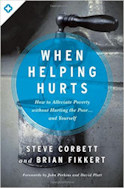
Working cross-culturally is never easy. It's even more complicated when there are different economic levels involved. There are occasions when we really want to help. As Steve Corbett and Brian Fikkert ask in their book When Helping Hurts, how can we help people without creating a sense of dependency that winds up making things worse for them rather than better?
Though names and places have been changed, this letter in the case study is genuine. It required a response. Imagine that you had to write that response. What would you say?
It should be noted that the "missionary" referenced is not the district superintendent. The person supervising the denominational ministry in that area is a Mexican citizen.
Rev. Roswell's church in Texas averages attendance in the mid-20s. She has been pastoring there for about 10 years.
Dear . . . . .,
I was reading the update on the upcoming trip to Mexico, and it sounds exciting.
Last year, our church sent two from the congregation, and we had planned to send four this coming year. Now, that plan has changed, and I thought perhaps you could help me flesh out our new plan.
Maria, one of the two participants from our church, acted as a translator last year. She became good friends with the Mexican pastor and his wife, who cooked and cared for the American team members working at their church. While Maria was with them, she noticed a great need in their home and church for simple things.
Upon returning home, Maria gave a great report to our church. So, we decided to partner with this couple for a year. Our plan was to send them financial support and to help with their two boys as we saw a need. We wound up being unable to send them money the traditional way, but we have still communicated in spite of that obstacle.
We recently had a note from them saying they have been moved to a new place and are now across the border from Del Rio. They have been told there is no money available to help them. They live in one room of the house because it has been flooded and is in terrible condition.
This year, instead of paying for four people to go on the Mexico trip, we, as a congregation, will make a trip to this pastor's home and help them.
I would like to know why there is no money to help them and why they were moved into a place in such poor condition. My attempts to reach missionary Baker, who I understand is in charge of work in that area, have not brought results.
Thank you in advance for any information or advice you can give us. Thank you, and have a great trip.
— Pastor Lois Roswell, Seymour, TX
Paternalistic behavior, even when well-intentioned, can erode people's sense of control and dignity and cause unintended harm in cross-cultural ministry.
Mutual trust and respect can prevent or correct unintended paternalism. Empowering local leadership, encouraging accountability, promoting sustainable ministries, and involving all stakeholders in shared decision-making are essential. We must also be sensitive to signs of economic dependency and steer efforts toward self-reliance.
P — Prideful oversight that stifles local leadership
A — Assertion of cultural superiority over gospel truth
T — Trust placed in outside control rather than local leadership
E — Erosion of authentic contextual witness
R — Replication of Western norms instead of Christlike character
N — Neglect of local voices and God-given potential
A — Arrogance masked as aid, creating dependence
L — Loss of dignity for local believers and communities
I — Impeding Spirit-led growth with rigid structures
S — Substitution of method for mission
M — Mission drift toward empire, not kingdom
Like acrostics? Here are more of them.


